

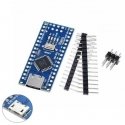
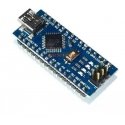
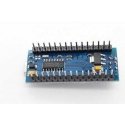
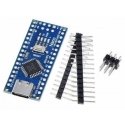
The product's shade and actual color may differ from what is shown in the picture, as the images are for illustrative purposes. The product description is general and may not include all the product's features.
NANO V3.0 16MHz micro USB – ATmega328P – CH340 – clone – Arduino
29.00 €
3886457 ABC-17529
5904384723935
Shipping 8-11 b.d.
You are interested in this product?
All about the product
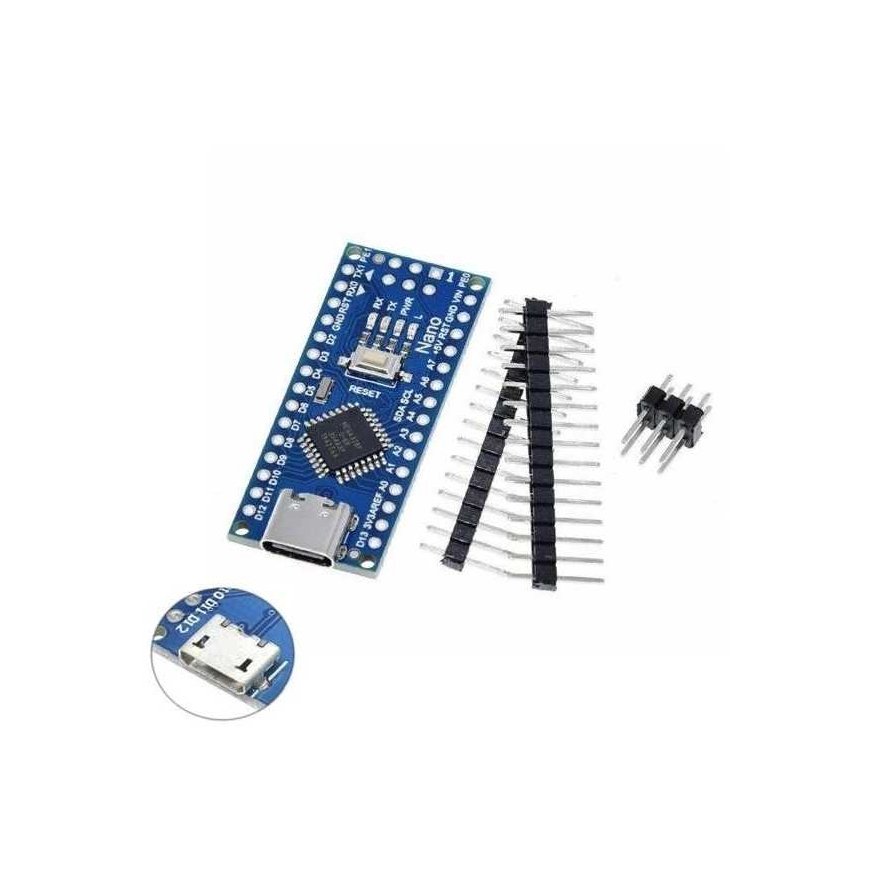
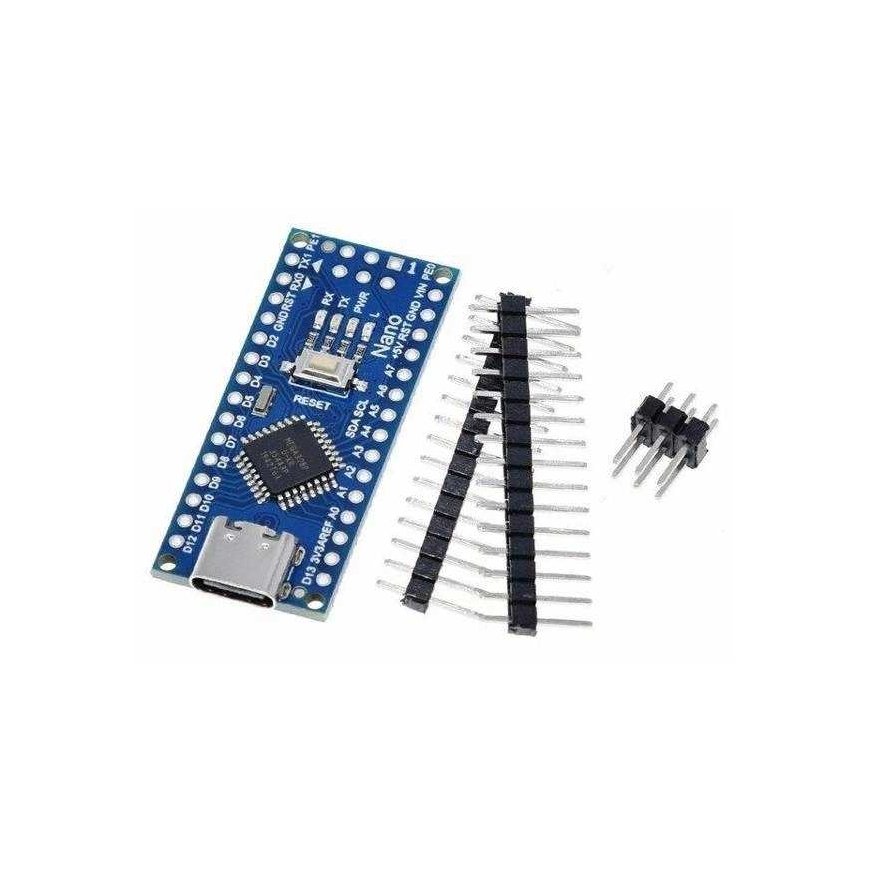
NANO V3.0 16MHz – Micro USB output – ATmega328P – CH340 – Compatible with Arduino
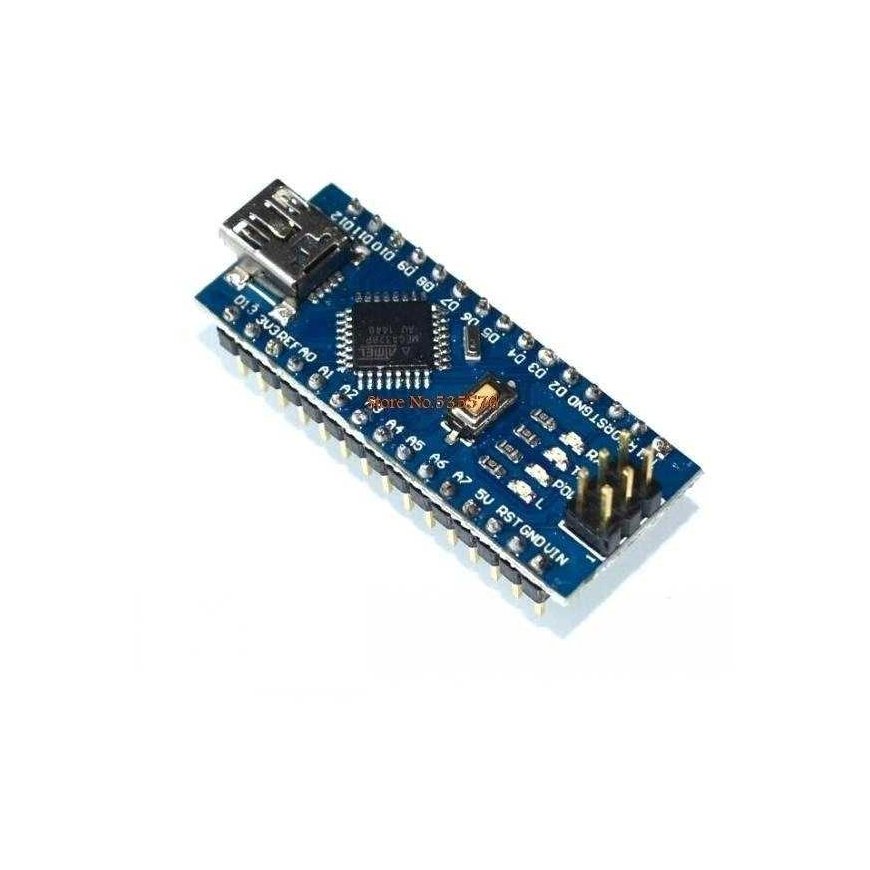
Universal mini module, compatible with the original Arduino, equipped with an ATmega328P microcontroller and Micro USB connector (version with pins for self-soldering). Can be used in many microprocessor projects. The system is compatible with the Arduino project.
- Accurately reproduced maple ensures performance and reliability.
- NANO has a CH340 programmer, which requires an additional driver that you can find below.
- Thanks to the convenient USB Type-C connector, this module is easy to connect to a computer and program. Due to its small size, it is suitable for smaller projects.
- Atmega328 microcontroller used in Arduino.
- Nano has a voltage stabilizer, so the module can be powered with a voltage higher than 5V.
- The Nano version, like the Pro, is based on the popular Uno module
- Has an Atmega328 microcontroller.
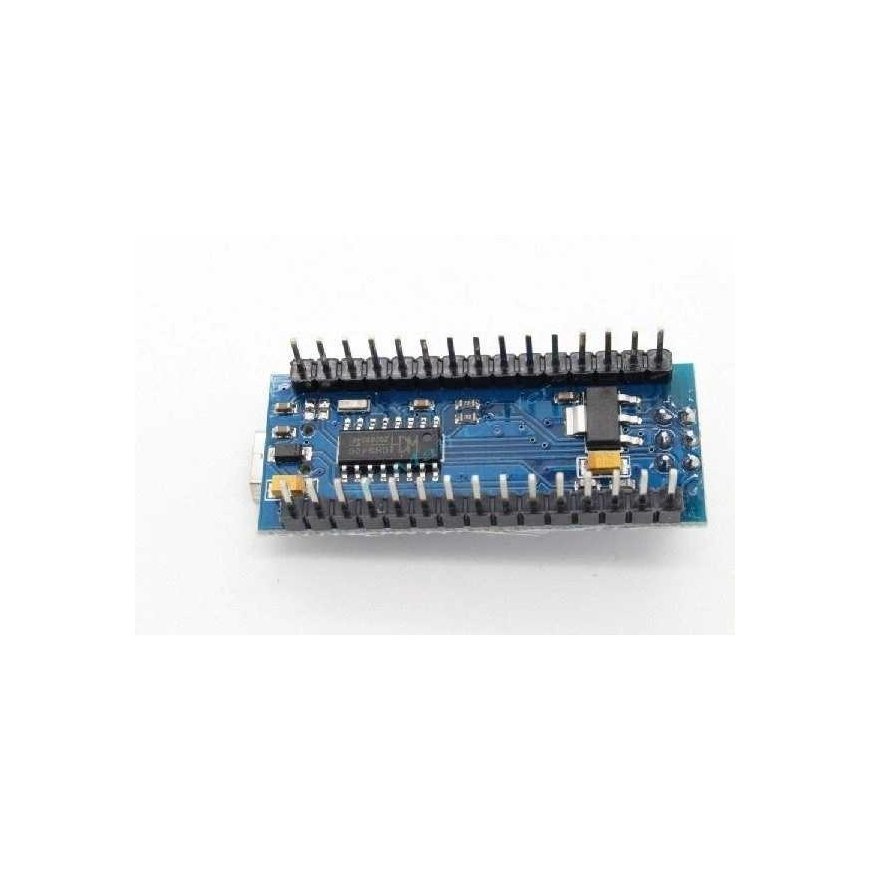
- The board has a Micro USB connector with a CH340 chip
- The board has an ATmega328 processor with
- 32kB Flash memory
- 1kB SRAM memory
- 1kB EEPROM memory
- It is clocked by a signal with a frequency of 16 MHz.
- The board has pins – outputs/inputs
- 14 digital pins - can be used as input or output. The pins operate according to the TTL5V standard. Each of them has a maximum efficiency of 40mA and also has built-in pull-up resistors. Some pins have additional functions (UART, INT, PWM, SPI, LED).
- including 6 PWM channels, for example, for servo/motor control, such as SG-90
- 8 analog inputs, each allowing measurement at 10-bit resolution. Some pins have additional functions (I²C, AREF, Reset).
- 14 digital pins - can be used as input or output. The pins operate according to the TTL5V standard. Each of them has a maximum efficiency of 40mA and also has built-in pull-up resistors. Some pins have additional functions (UART, INT, PWM, SPI, LED).
- Arduino Nano can be powered
- via micro USB cable
- unregulated 7-12 V voltage supplied to pin 30 or from a regulated 5 V power source.
- The system automatically selects the highest voltage power source.
- The CH340 chip, ensuring communication with the computer, can be powered only from USB.
- The system has a communication system with the computer via:
- UART interface – connected to pins 0 (RX) and 1 (TX).
- USB - CH340 chip
- Additionally, I²C (TWI) and SPI interfaces are supported
- Operates at 5 V voltage.
- Manual reset switch
- LEDs to indicate system operation
- The connections laid out on the board allow the board to be connected directly to a breadboard.
- This version has soldered connection pins
- Programming is done using the Arduino IDE, free software that is particularly convenient for beginners. – IDE program – http://www.arduino.cc/en/Main/Software
- The microcontroller on the board has a pre-installed bootloader that allows uploading software without additional hardware.
- By default, the BLINK LED 13 program and bootloader are uploaded to the module – description http://majsterkowo.pl/od-go-zaczac-zabawe-z-arduino/
- Additionally, the processor can be programmed via ICSP.
- Power voltage: 5V
- Microcontroller: ATmega328 - 16 MHz
- Ports – I/O pins: 14
- Number of analog inputs: 8
- Number of PWM outputs: 6
- Serial interfaces: UART, SPI, I2C
- External interrupts
- Overcurrent protection
- The module is made of 0.8 mm thick laminate
- Weight less than 5 g.
- Distance between pins 2.54 mm (can be mounted on breadboards)
- Dimensions: 45x19 mm
- 32kB flash memory
- 1kB EEPROM
- 1kB SRAM
- 2 8-bit timers/counters
- 1 16-bit timer/counter
- connector: Micro USB
- Power
- If the power voltage is higher than 5 V, it should be connected to the RAW pin, which is connected to the stabilizer.
- VCC is directly connected to the microcontroller pins, connecting a voltage higher than 5 V can permanently damage the system.
- Inputs/outputs
- Arduino Pro has 14 digital input/output (I/O) pins.
- Each pin allows a maximum current of 40 mA, allowing direct connection of LEDs with resistors and control of other integrated circuits.
- In addition to standard I/O, some pins also have special functions.
- programming
- You can create and upload software in the free environment provided by the manufacturer.
- For programming via UART, you can use the PL2303 programmer
- "Arduino Pro Mini" main page – http://www.arduino.cc/en/Main/arduinoBoardNano
- IDE program – http://www.arduino.cc/en/Main/Software
- Nano V3.0 board pinout errors – http://microcontrollers.cba.pl/?p=6
- USB chip driver – http://www.driverscape.com/download/usb-serial-ch341
Illustrative image.
Including- NANO V3.0 16MHz Micro USB - ATmega328P - CH340 - Clone - 1 pc