

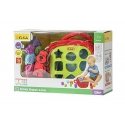
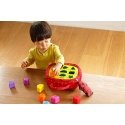
The product's shade and actual color may differ from what is shown in the picture, as the images are for illustrative purposes. The product description is general and may not include all the product's features.
K's Kids Sorter with Patrick shapes
3802154 KIDS-0283
4892493106378
Shipping 13-17 b.d.
All about the product
Select the right educational toys for your child.
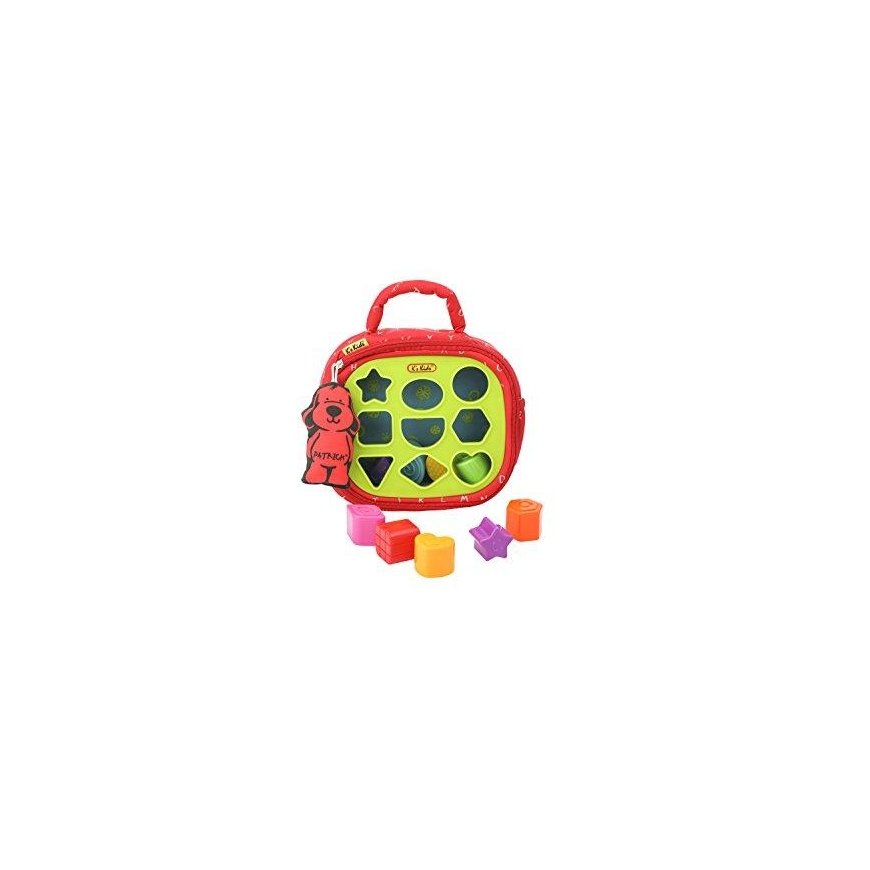
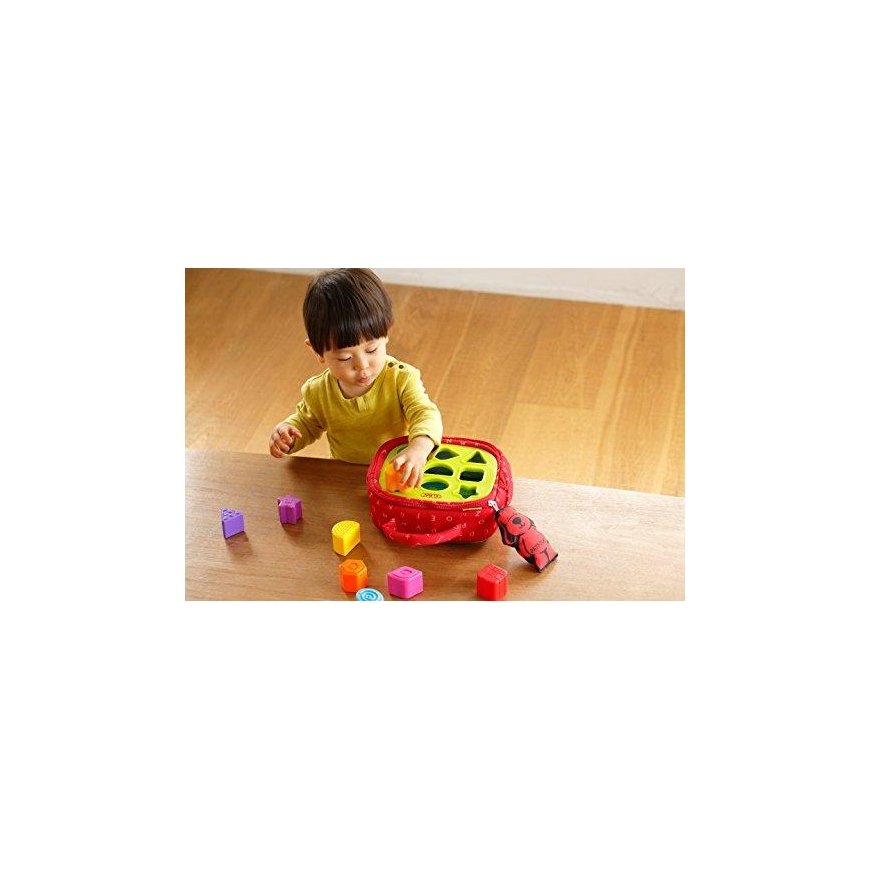
This toy helps your child discover and develop their intellect. Colorful blocks help your little one recognize different shapes, associations, and develop hand-eye coordination. Throwing blocks into the bag fosters the child's habit of keeping things tidy, and thanks to the handle, the toy can be taken along wherever they go.
Blocks are one of the most creative and developmental toys we can offer our child. Building, creating, and making new structures or vehicles enhances the child's spatial imagination, teaches planning, and develops motor skills.
Toy description:
- shape sorter
- practical carrying handle
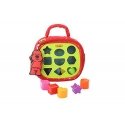
- 9 blocks
- zipper closure
- play "peek-a-boo" while learning about shapes
Each "K's Kids" toy element is designed to help children develop properly. To make it easier for parents to understand the benefits of playing with "K's Kids" products, a Skills Triangle was created, showing what a child needs for proper physical, cognitive, and social development.
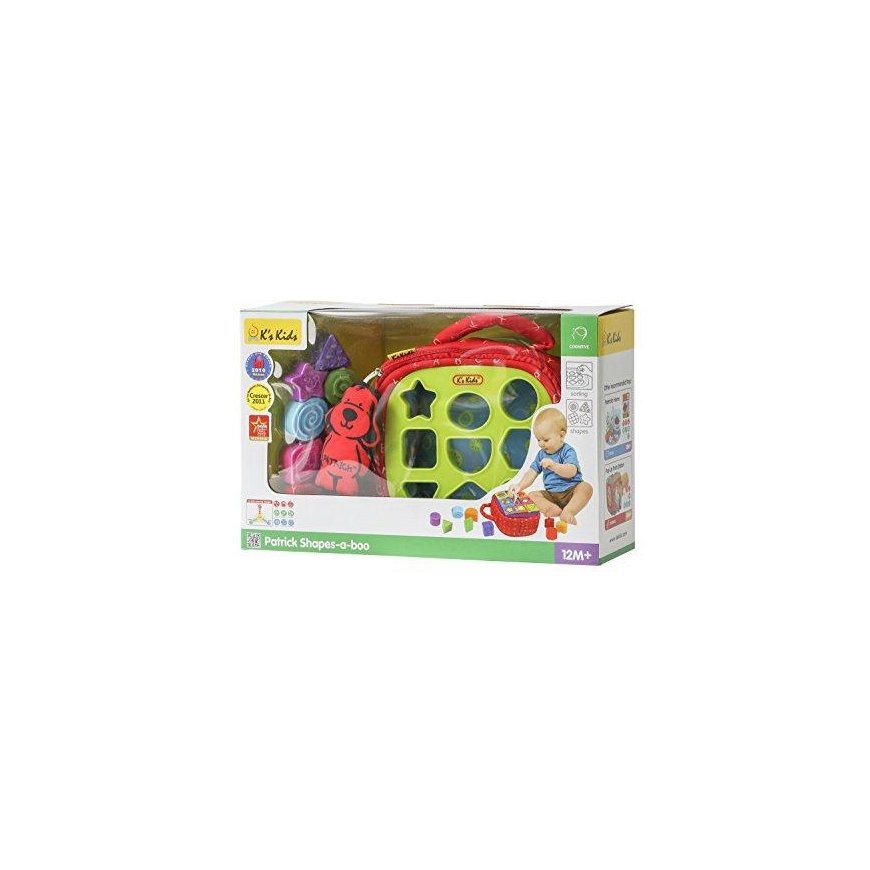
The Skills Triangle is a simple guide for parents, showing what skills a child acquires or develops while playing with a particular toy, and is provided on each product's packaging. Some toys are designed to develop multiple areas, while others focus on more, depending on children's needs and abilities at different developmental stages.
What skills can your child develop while playing with Patrick's sorter?
Physical development
senses – to awaken the child's curiosity and encourage them to explore their surroundings. Toys that stimulate the senses are extremely important in the early stages of a child's development.
fine motor skills – develop precise and controlled movements, including facial expressions, hand-eye coordination, and proper word articulation
gross motor skills – involve larger muscles responsible for the movement of hands, legs, feet, or the whole body. Toys encourage the child to kick, crawl, run, or jump.
Cognitive development
Logical skills – allow children to connect fragments of information. Toys such as puzzles or blocks can develop children's intellect, ability to follow events, concentrate, think, and solve problems.
creativity – nurturing a young child's imagination is very important in the process of forming abstract thinking and creativity. This trait affects the ability to improvise, take initiative, and solve problems.
language skills – linguistic intelligence is the ability to produce sounds and use language, express oneself, and understand others. Toys that improve the ability to understand words, distinguish sounds, rhythms, and forms of change influence the development of this function in the developmental process.
Social development
emotions – a healthy child should be able to express and control their emotions. The realization that they are loved and protected fosters their sense of security. Toys that can become a child's friends and help them express their feelings play a very important role in learning how to communicate effectively with others, building mutual trust.
communication – communication skills help the child perform tasks that require cooperation and facilitate teamwork
Self-esteem – is a complex of achievements that the child receives from important people in their life, especially parents and peers. When a child can complete a task assigned to them by a toy, they feel satisfied with themselves. This helps them develop a stronger sense of self-worth and better self-esteem.
Below are the individual stages of skill development for the child, depending on their age:
Stage 1 (6–18 months)
Goal: Learn to listen – respond to sounds.
Method: You can produce different sounds by shaking the toy with the blocks inside and folding the tabs at the back of the toy. Make these sounds to attract the baby's attention and observe how the baby reacts to them.
Goal: Sensory stimulation – touching and feeling different textures.
Method: A bag made of different materials. The outer shell is soft and smooth, while the flaps at the back are crinkly and crumpled. Additionally, all plastic blocks have uneven surfaces. Encourage the child to touch and feel the different textures of the toy, as well as the uneven structure.
Goal: develop fine motor skills – grasping.
Method: Encourage the child to grasp the blocks with both the right and left hands.
Goal: Develop motor skills – turning.
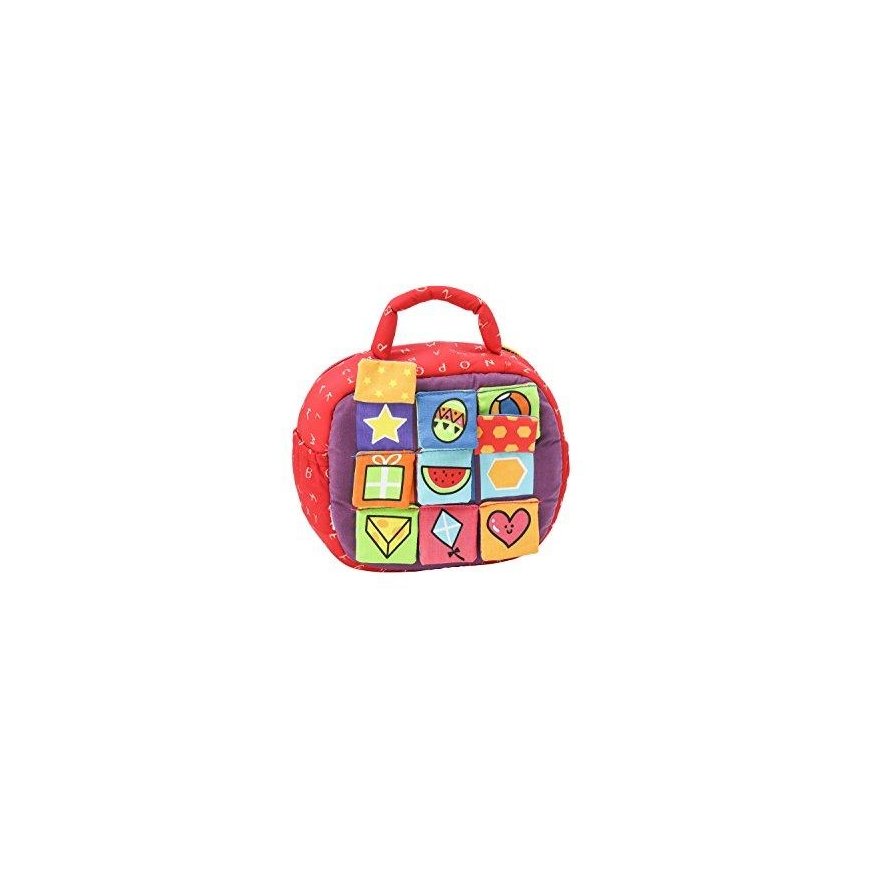
Method: Encourage the child to flip the tabs at the back.
Goal: Develop motor skills – swinging.
Method: encourage the child to hold the toy by the handle and swing a bag full of blocks to create sound. This helps your child develop motor skills.
Stage 2 (12–24 months)
Goal: move the zipper.
Method: By pulling the bag's zipper, the child's fine motor skills are developed.
Purpose: Stacking.
Method: Encourage the child to stack 2–3 blocks one on top of the other. This will help your child improve their balance and patience.
Goal: put blocks into pockets.
Method: Allow the child to put blocks into the bag's pockets on both sides and then try to pull them out. The difficulty of pulling out the blocks will depend on the shape of the block placed in the pocket. This exercise develops the child's motor skills and teaches the concepts of "inside" and "outside".
Goal: learn colors.
Method: Teach the child to recognize colors using colored blocks.
Goal: learn shapes.
Method: Teach children to recognize shapes using colored blocks.
Stage 3 (18–30 months)
Goal: learn the alphabet.
Method: Teach children to recognize the letters of the alphabet according to the letters on the bag.
Purpose: Stacking.
Method: Encourage the child to stack 3–5 blocks one on top of the other. This will help your child improve their balance and patience.
Goal: distinguish shapes.
Method: Encourage the child to recognize the shapes of the blocks and throw them into the bag through the corresponding holes. This activity teaches the child to distinguish shapes and develops fine and gross motor skills.
Goal: simultaneously recognize the color and shape of a block.
Method: State the color and encourage the child to find the shape of that color, and then throw the block into the hole that matches that shape.
Goal: recognize shapes.
Method: State the shape of the block. Encourage the child to find the shape and insert it into the bag through the corresponding hole.
Stage 4 (24–36 months)
Purpose: Stacking.
Method: Encourage the child to stack 5–6 blocks one on top of the other. This will help your child improve their balance and patience.
Goal: Learning subjects.
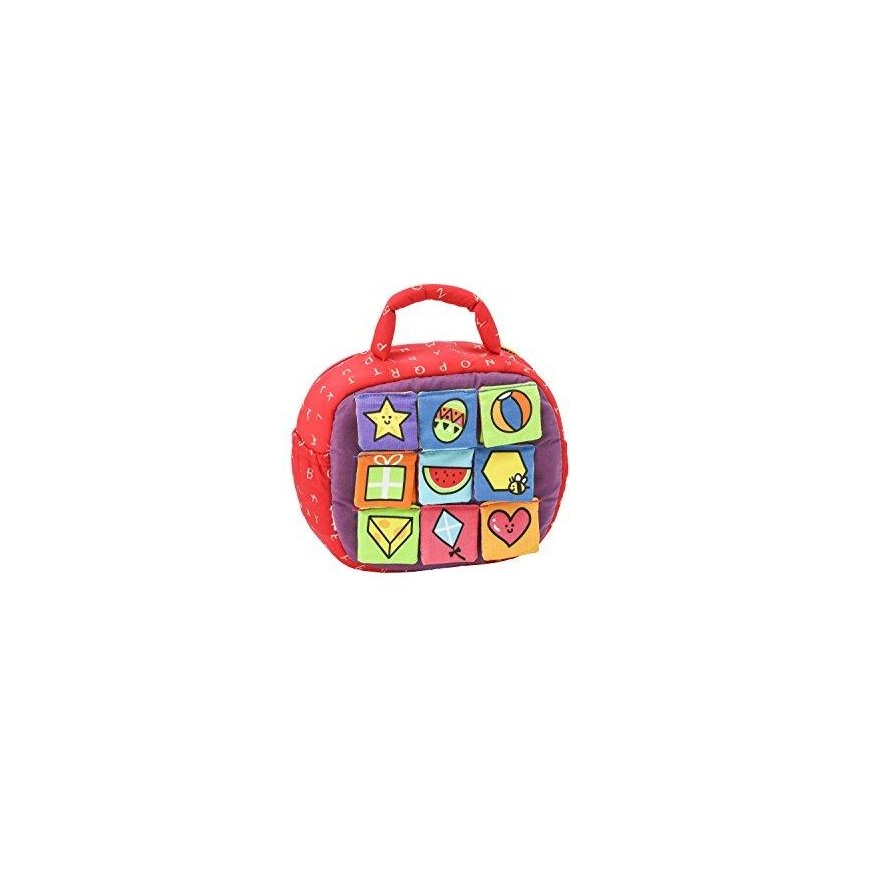
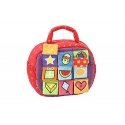
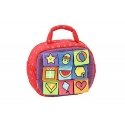
Method: Teach children everyday objects using the graphics on the back folds of the bag.
Goal: learn to recognize the shapes of everyday objects.
Method: Teach children the shapes of everyday objects by revealing the tabs at the back of the bag. For example, a starfish is a star, a ball is a circle, and so on.
Goal: Match shapes with pictures on the back of the bag.
Method: Encourage the child to place blocks on the corresponding shape pictures on the back of the bag.
Stage 5 (30–36+)
Goal: learn to organize and tidy up.
Method: Blocks can be stored in the bag. Children can learn to tidy up by putting the blocks back into the bag when they finish playing.
Goal: tracing shapes.
Method: Children can learn to draw shapes using blocks to trace them.
Goal: recognize shapes by touch.
Method: Place the blocks under a blanket. State the shape that the child should find. Let the child search for the shape but in a way that does not uncover the blanket.