

New
The product's shade and actual color may differ from what is shown in the picture, as the images are for illustrative purposes. The product description is general and may not include all the product's features.
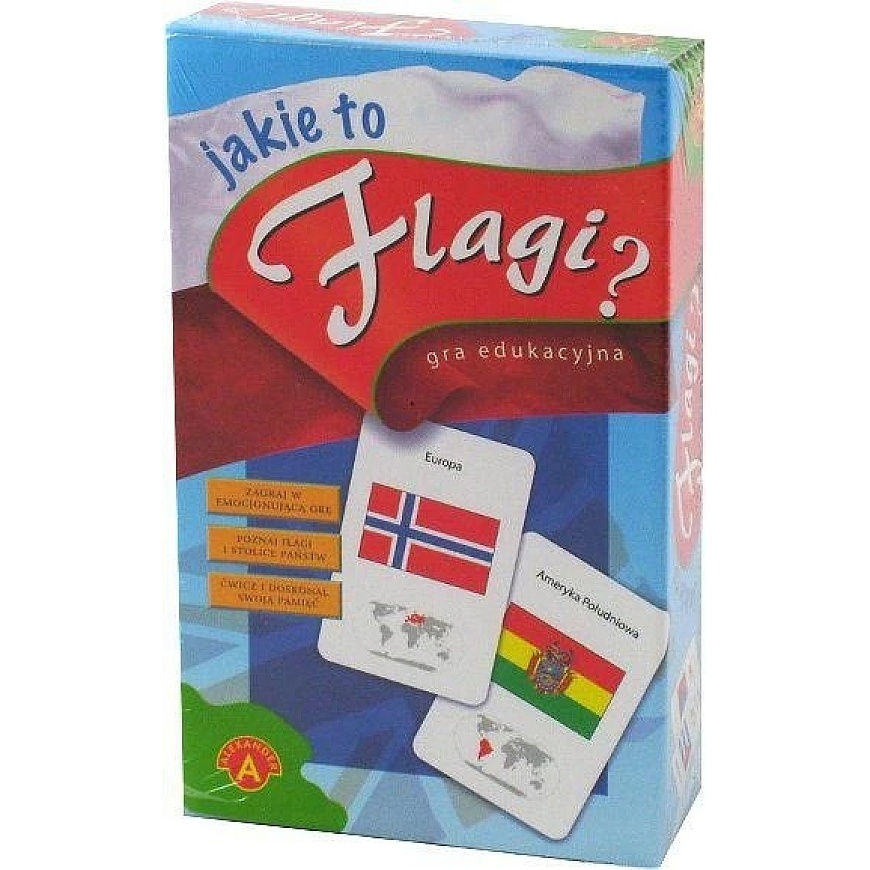
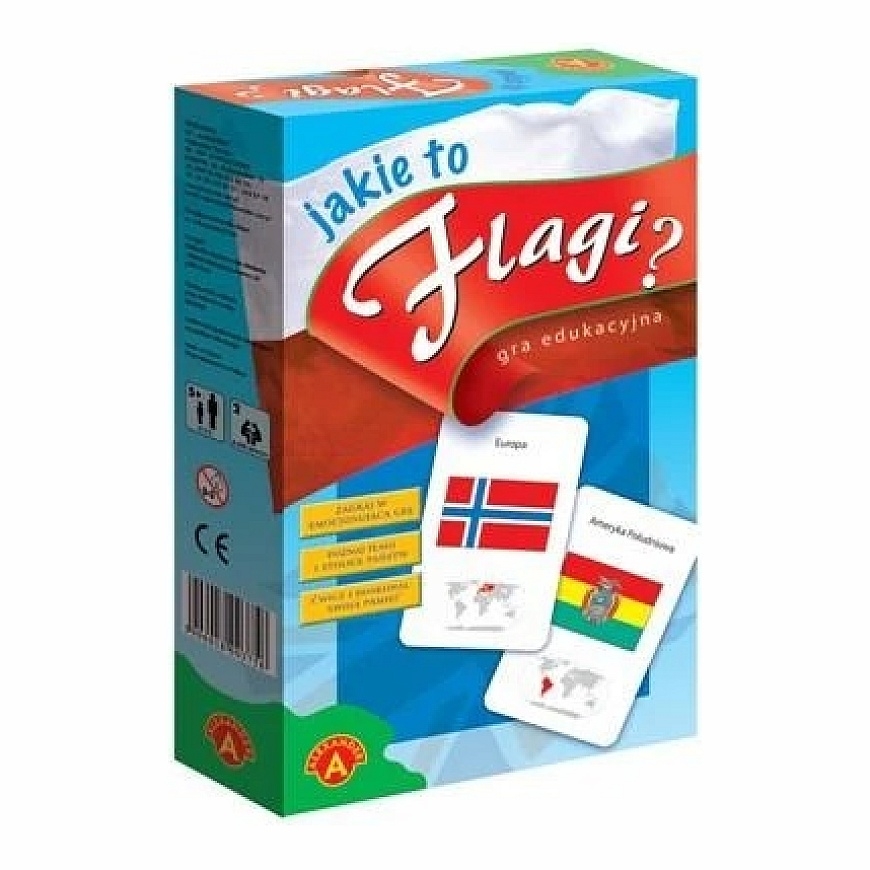
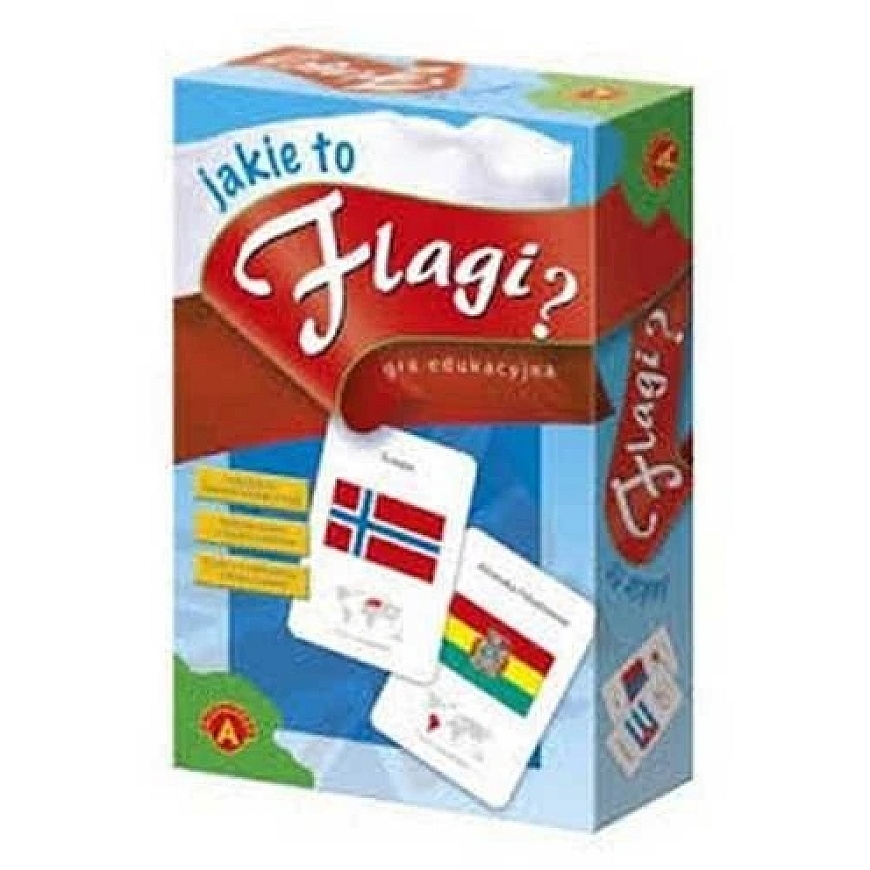
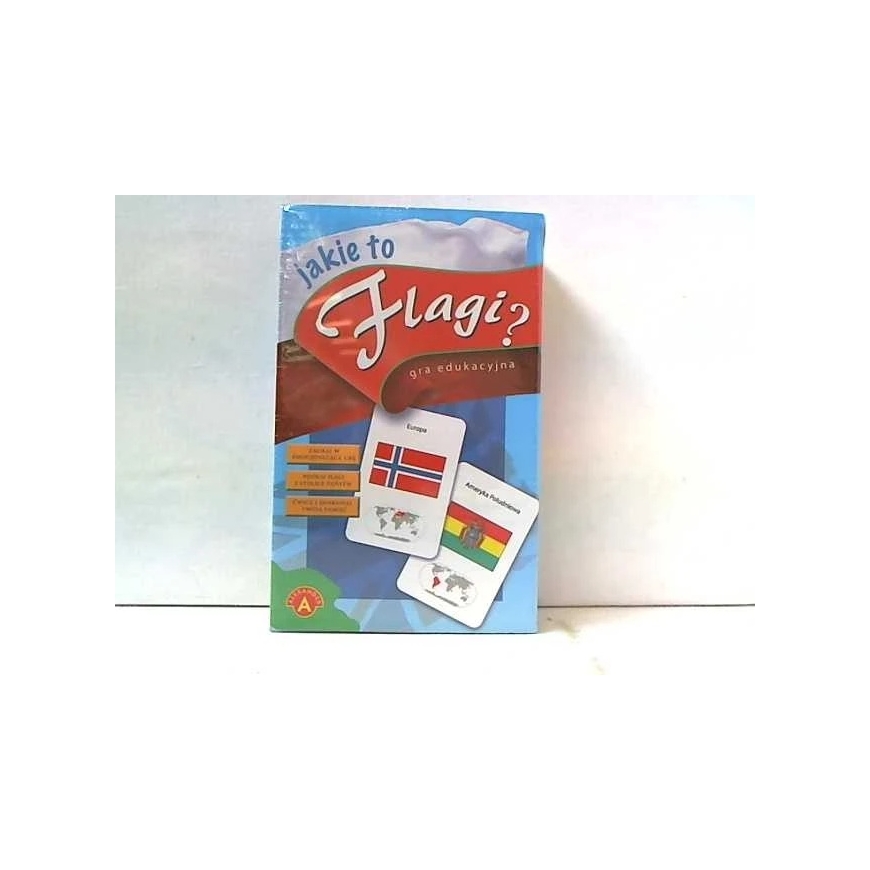
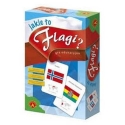
Alexander Aleksandras Aleksandras Educational Game What Flag Is This? Mini Version GR0646
13.45 €
5063262 0399
5906018003994
Shipping 8-12 b.d.
You are interested in this product?
All about the product
What is this flag - Mini
 The game "What is the flag?" perfectly combines business with pleasure. This game is fun and at the same time a great opportunity to learn to recognize
 national flags (55 countries). Players can also learn the names of countries' capitals, their area, population, and more.
 The game is designed for children and adults. The goal of the game is to collect as many cards with national flags as possible. The game can be played in two ways.
 Number of players from 2 to 4 people
 GAME I
 Preparation for the game:
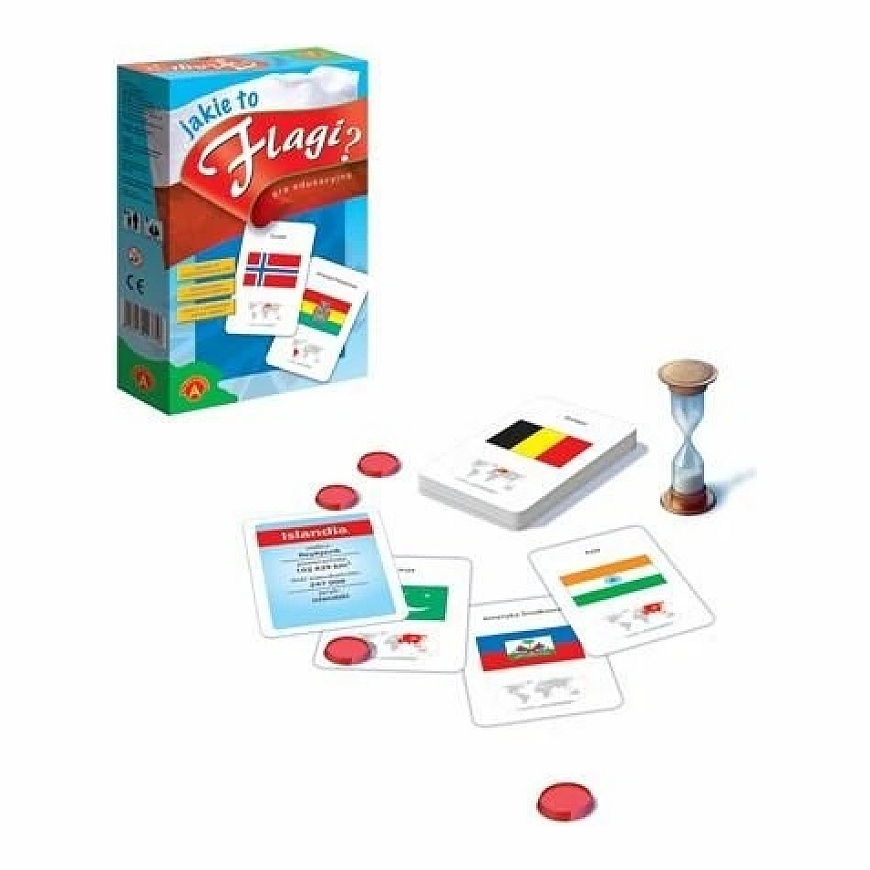
 One player shuffles all the cards and places the shuffled deck face up on the table. If players agree to a time limit
 for their response, prepare an hourglass and agree on how many times it should be flipped until the response time is up.
 Game rules:
 The game starts with the youngest player. Looking at the flag from the top of the card deck, it becomes clear which country it belongs to. At the same time,
 the player to the left of the respondent measures the response time with the hourglass - if the time is exceeded,
 the next in line answers (rotate clockwise). Once the name of the country is identified, the player takes a card from the deck and
 flips it. On the other side of each card is the name of the country that the flag on this card belongs to.
 If the read name matches the name previously given by the player, they take the card and place it next to them. If the player made
 a mistake and indicated the wrong country name, they receive a plastic "penalty token" and place the card at the bottom of the deck,
 with the flag facing up. The player who collects 3 "penalty tokens" during the game is eliminated from the game. If the player during their turn says
 that they do not know which country the flag on the card belongs to, they do not receive a penalty token, and the card
 should be placed at the bottom of the deck with the flag facing up after the country's name (on its other side) is read aloud.
 The winner is the one who collects the most cards, and the game ends when the last card is drawn from the deck.
GAME II
Preparation for the game:
Before starting the game, lay out all the cards on the table with flags face up, so they do not cover each other. Cardboard tokens with country names
should be placed in the box. An hourglass (used under the same rules as in the first game version) must be placed on the table.
Game rules:
The chosen player (as in the first variant) starts the game by drawing a cardboard token with the country name from the box (you are not
allowed to look at the tokens in the box). They then read it aloud and search for the card with the flag corresponding to the read name.
After finding the card, they flip it over and all players check the name of the country written on the other side of the card. If the name matches the name on the token,
the player takes the token and places it next to them. If the name does not match, the player throws the token back into the box and receives a plastic
"penalty token" as a penalty (during the game, a player can receive 3 penalty tokens - for the fourth incorrect answer, the player is eliminated from the game).
Regardless of whether the answer is correct or incorrect, the flag card remains in its place, face up. The next in line is the player sitting to the left of the one who finishes their turn.
A player who does not know which flag corresponds to the country name on the drawn token can answer "I don’t know" and throw the token back into the box.
They do not receive a penalty token for this, and the next player in line takes their turn. The winner is the one who collects the most
tokens with country names (regardless of how many "penalty tokens" they have). Before starting the game, all participants can briefly familiarize themselves with
the set of flags with country names. Participants in the game can change the rules at their discretion (e.g., if players have already learned
to identify which country the correct flag belongs to, they can make the task harder by requiring that the country name includes
(the capital's name)
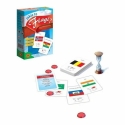
 Package contents: - 55 cards, - 55 cardboard tokens, - 20 plastic tokens, - hourglass, - instructions
 One of the most effective ways to develop children's communication skills is to play various games with their loved ones. Board games, card games, and others.
 help develop intellect, the ability to express oneself effectively, and convey one's intentions and desires to others. Games are a great way
 to have fun with loved ones. Through such games, children can spend more time with their parents. The set is packaged
in a very beautiful colorful box, perfect for a gift. You can find the largest selection of board games in the "Jokomisiada" store.