






The product's shade and actual color may differ from what is shown in the picture, as the images are for illustrative purposes. The product description is general and may not include all the product's features.
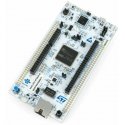
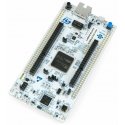
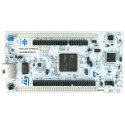
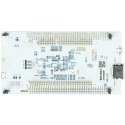
Stmicroelectronics STM32 NUCLEO-H755ZI-Q - STM32H755ZIT6 ARM Cortex M7/M4
88.99 €
Monthly payment from 3,19 €
3679940 AN-15489
5904422323851
Shipping 11-18 b.d.
You are interested in this product?
All about the product
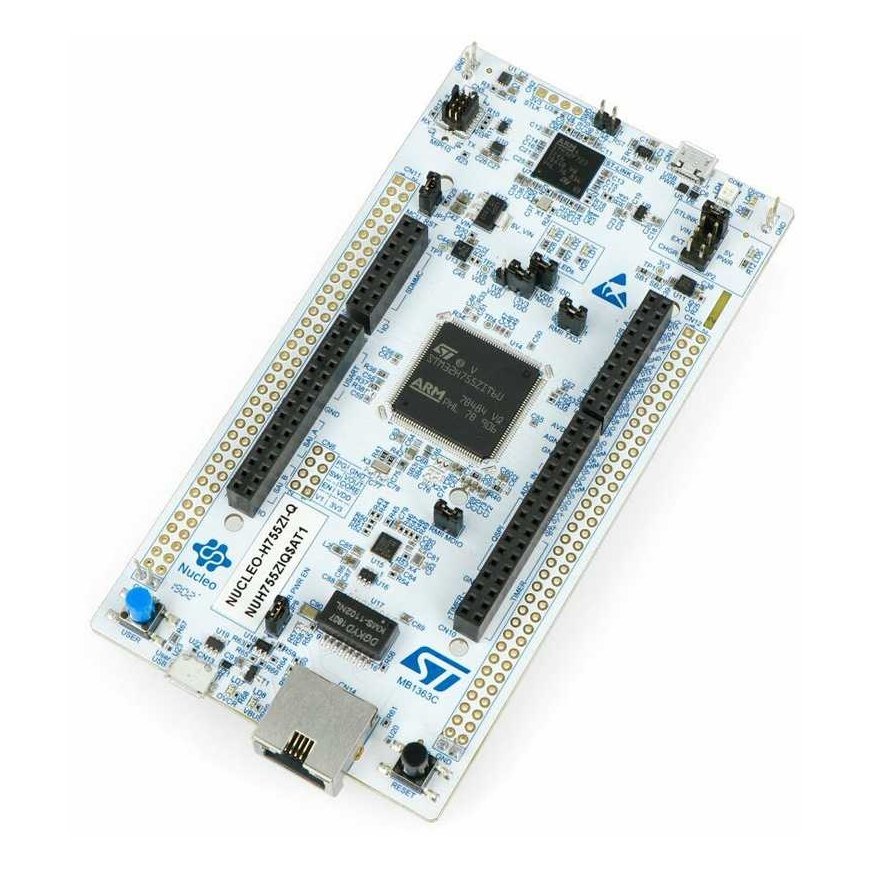
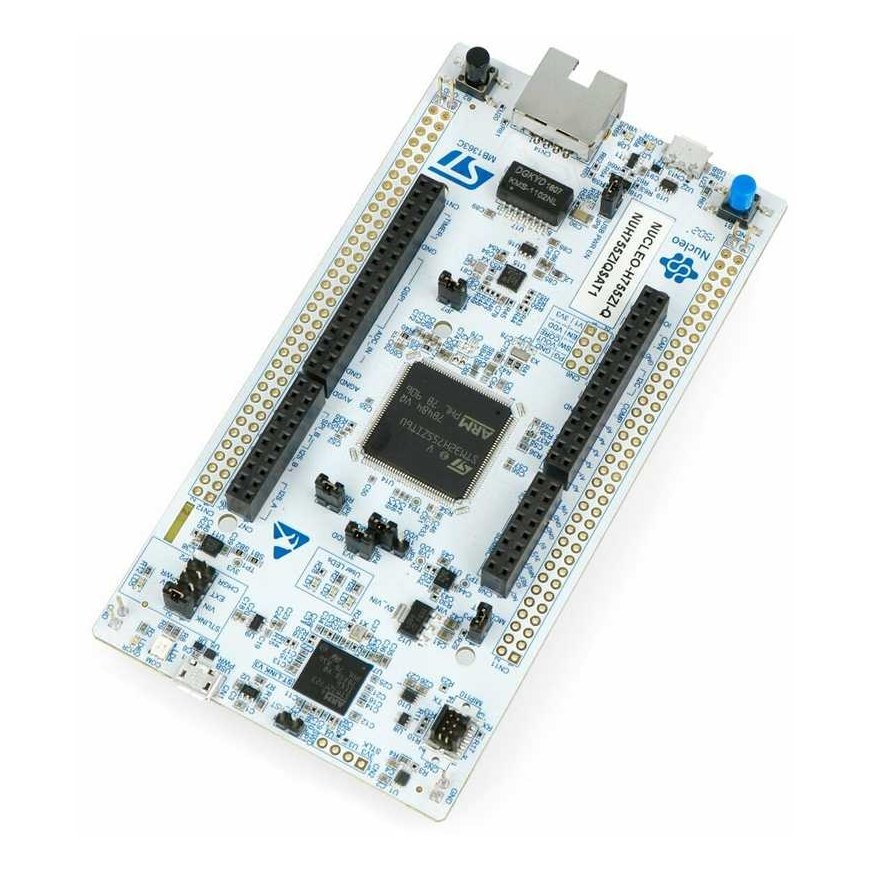
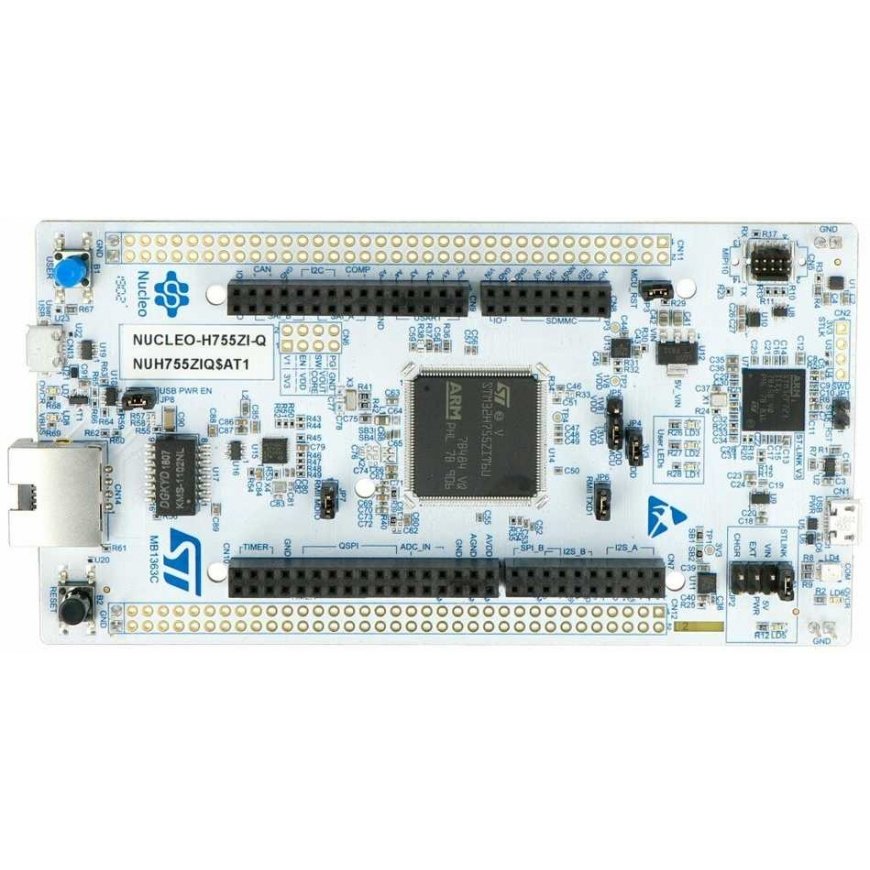
The module is based on a 32-bit STM32 microcontroller, featuring an ARM Cortex M7 480 MHz core and an ARM Cortex M4 240 MHz core. It has 2 MB of flash and 864 kB of SRAM. The Nucleo is cross-platform and has connectors for Arduino boards and Ethernet sockets. The Nucleo works with the most popular programming platforms, including Keil, IAR and GCC compiler-based environments.
Specifications:
- Microcontroller: STM32H755ZIT6
- Core: ARM Cortex M7 32-bit / ARM Cortex M4
- Clock frequency: 480 MHz / 240 MHz
- Flash memory: 2MB
- SRAM: 864KB
- RAM: 1 MB
- Analog-to-digital converter (ADC): 16-bit, 36 channels
- Number of 16-bit timers: 17
- Number of 32-bit timers: 2
- Interfaces: 4x I2C, 6x SPI, 3x I2S, 2x CAN, 4x USART, 4x UART, USB OTG FS
- Two types of connections:
- Arduino Uno Rev3 compatible connectors
- Standard STMicroelectronics Morpho pins providing access to microcontroller outputs
- The module is compatible with the mbed (mbed.org) system
- ST-Link/V2 tuner on board, with the ability to operate as a standalone device with SWD output
- Power source:
- Via USB
- External source: 3.3 V and 7-12 V via ST Zio or ST morpho connectors
- 5 V via ST morpho connector
- Three built-in LEDs:
- 1 x indicates the supply voltage
- 1 x indicates connection
- 1 x at your disposal
- Two buttons:
- 1 x RESET
- 1 x at your disposal
- IEEE-802.3-2002 Ethernet interface support
- Quartz resonator: 32.768 MHz
- Three different interfaces via microUSB (renaming of USB):
- Virtual COM port
- Storage
- Programming and debugging port
- Cryptographic standards:
- AES 128, 192, 256, TDES
- HASH (MD5, SHA-1, SHA-2), HMAC
- Random number generator
- The module is supported by the most popular environments such as IAR, Keil and platforms based on the GCC compiler