






Produkta tonis un faktiskā krāsa var atšķirties no attēlā redzamā, jo attēli ir ilustratīvi. Produkta apraksts ir vispārīgs un, iespējams, tajā nav iekļautas visas produkta īpašības.
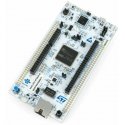
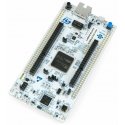
Stmicroelectronics STM32 NUCLEO-H755ZI-Q - STM32H755ZIT6 ARM Cortex M7/M4
88.99 €
Ikm. maksa no 3,19 €
3679940 AN-15489
5904422323851
Piegāde 11-18 d.d.
Šī prece Jūs ieinteresēja
Viss par produktu
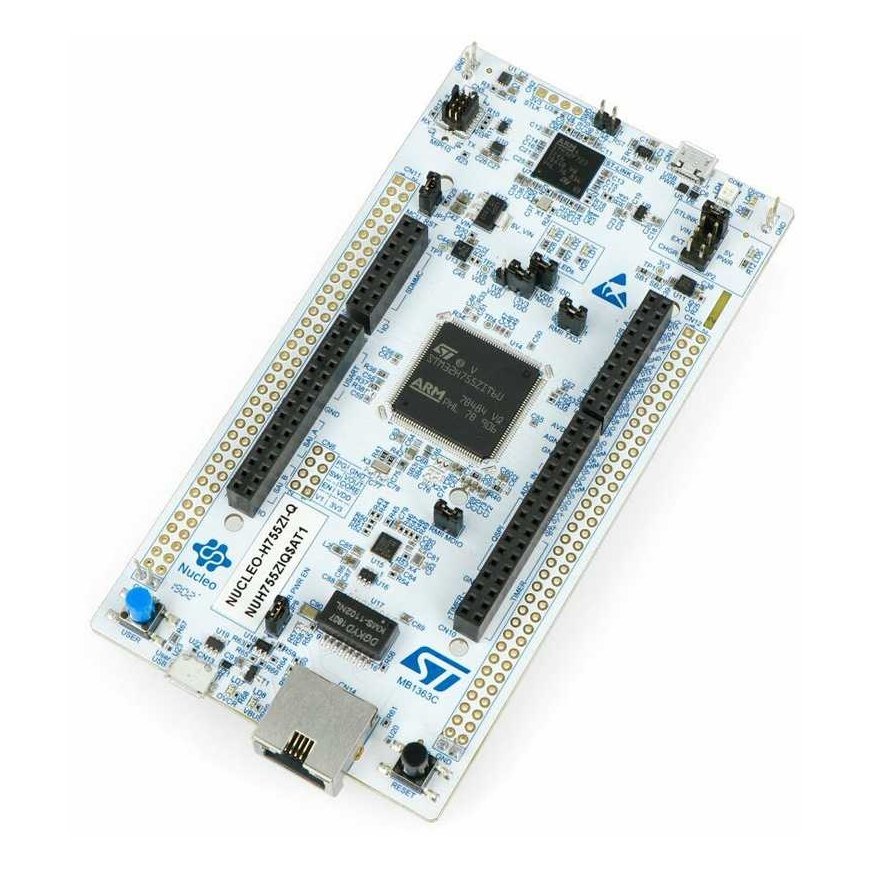
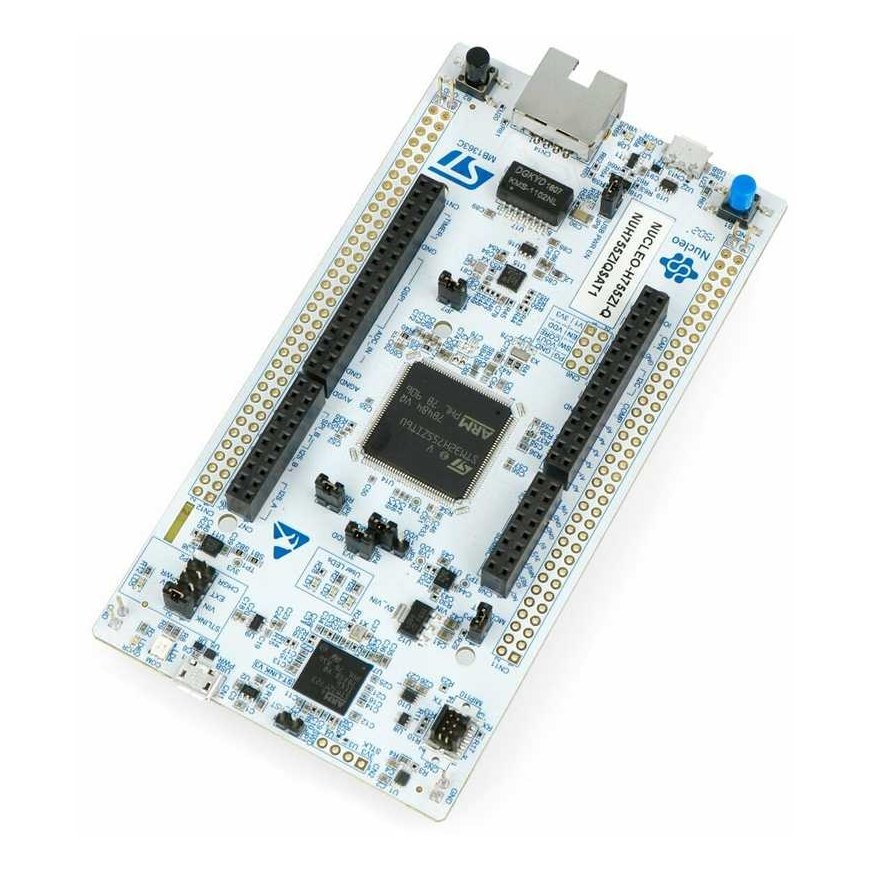
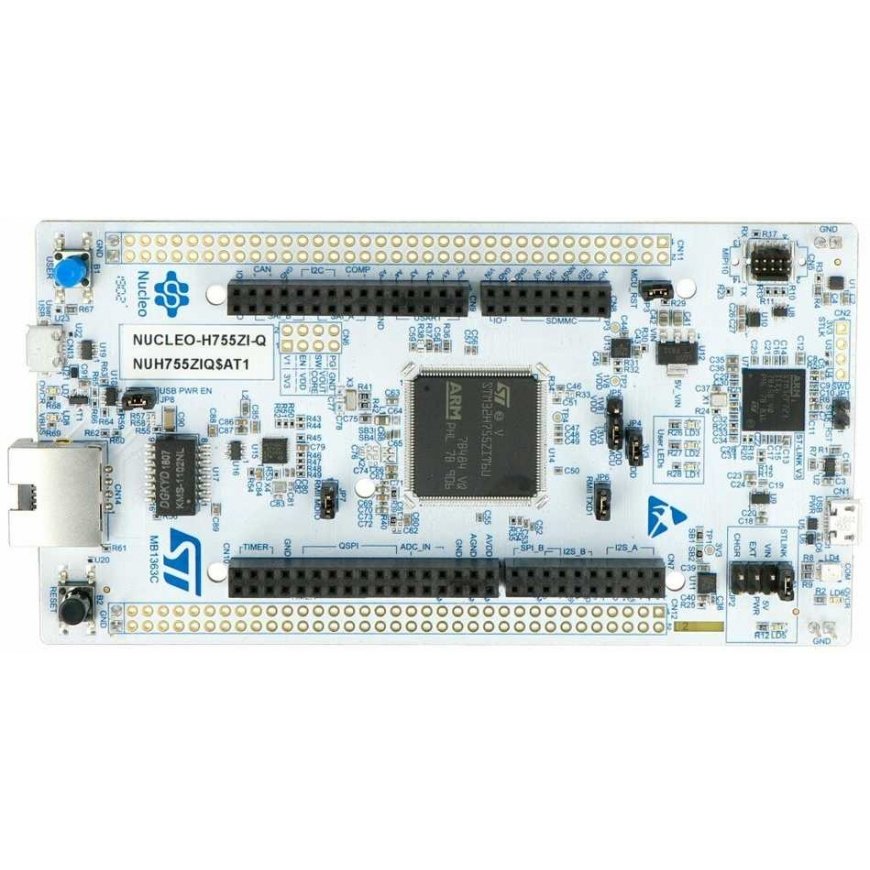
The module is based on a 32-bit STM32 microcontroller, featuring an ARM Cortex M7 480 MHz core and an ARM Cortex M4 240 MHz core. It has 2 MB of flash and 864 kB of SRAM. The Nucleo is cross-platform and has connectors for Arduino boards and Ethernet sockets. The Nucleo works with the most popular programming platforms, including Keil, IAR and GCC compiler-based environments.
Specifications:
- Microcontroller: STM32H755ZIT6
- Core: ARM Cortex M7 32-bit / ARM Cortex M4
- Clock frequency: 480 MHz / 240 MHz
- Flash memory: 2MB
- SRAM: 864KB
- RAM: 1 MB
- Analog-to-digital converter (ADC): 16-bit, 36 channels
- Number of 16-bit timers: 17
- Number of 32-bit timers: 2
- Interfaces: 4x I2C, 6x SPI, 3x I2S, 2x CAN, 4x USART, 4x UART, USB OTG FS
- Two types of connections:
- Arduino Uno Rev3 compatible connectors
- Standard STMicroelectronics Morpho pins providing access to microcontroller outputs
- The module is compatible with the mbed (mbed.org) system
- ST-Link/V2 tuner on board, with the ability to operate as a standalone device with SWD output
- Power source:
- Via USB
- External source: 3.3 V and 7-12 V via ST Zio or ST morpho connectors
- 5 V via ST morpho connector
- Three built-in LEDs:
- 1 x indicates the supply voltage
- 1 x indicates connection
- 1 x at your disposal
- Two buttons:
- 1 x RESET
- 1 x at your disposal
- IEEE-802.3-2002 Ethernet interface support
- Quartz resonator: 32.768 MHz
- Three different interfaces via microUSB (renaming of USB):
- Virtual COM port
- Storage
- Programming and debugging port
- Cryptographic standards:
- AES 128, 192, 256, TDES
- HASH (MD5, SHA-1, SHA-2), HMAC
- Random number generator
- The module is supported by the most popular environments such as IAR, Keil and platforms based on the GCC compiler