







Nikon Zf Body (silver)
5035300 4960759921802
Shipping 5-8 b.d.
All about the product
Nikon Zf - full-frame image quality, depth, and dynamic range; autofocus built using deep learning technology; excellent low-light performance and image stabilization. The Nikon Zf is a classic-style full-frame mirrorless camera based on a 24 MP BSI CMOS sensor. It is designed to resemble the look of the company's FM2 SLR from the early 1980s, making it a full-frame counterpart to the company's Z fc APS-C camera. The Nikon Zf uses the same EN-EL15c battery as most Nikon mid-range cameras, allowing for 380 shots (LCD) and 360 shots (EVF) on a single charge. With power-saving mode activated, these numbers increase to 430 and 410 shots per charge. It is charged via the camera's USB C port, which, unlike the Nikon Z8, is the only one available.

OBJECT RECOGNITION, NOISE REDUCTION, AND OTHER USEFUL FEATURES
Nikon does not claim that the Nikon Zf 24 MP BSI CMOS sensor is new, and apart from the greater AF coverage, most of its parameters match those of the older but well-regarded Nikon Z6 II sensor. However, the implementation of the latest "Expeed 7" processor has brought significant changes. First, it incorporates object recognition functionality into the camera's AF system, along with a Nikon Z9-like implementation of the company's "3D tracking" along with a 9-type object recognition system. Additionally, contextual noise reduction has been implemented, which more aggressively smooths areas that seem to lack detail. It is this noise reduction in JPEG and HEIF files that convinced Nikon to extend the camera's ISO range to 204,800 (the non-expanded limit is also increased to 64,000). Transitioning to the latest processor also allows the Nikon Zf to capture Raw files compressed using a more efficient high-efficiency compression system first seen in the Nikon Z9. The 11 frames per second speed appears to be the highest in Raw mode (in continuous high-volume mode, which is suspected to not include live view updates between frames), while in JPEG mode it goes up to 15 or 14 frames per second, depending on whether the electronic or mechanical shutter is used. There is also a JPEG-only mode "C30", which uses a video stream at 30 frames per second for capturing images, with a pre-release option, as seen in the Nikon Z8 and Nikon Z9.
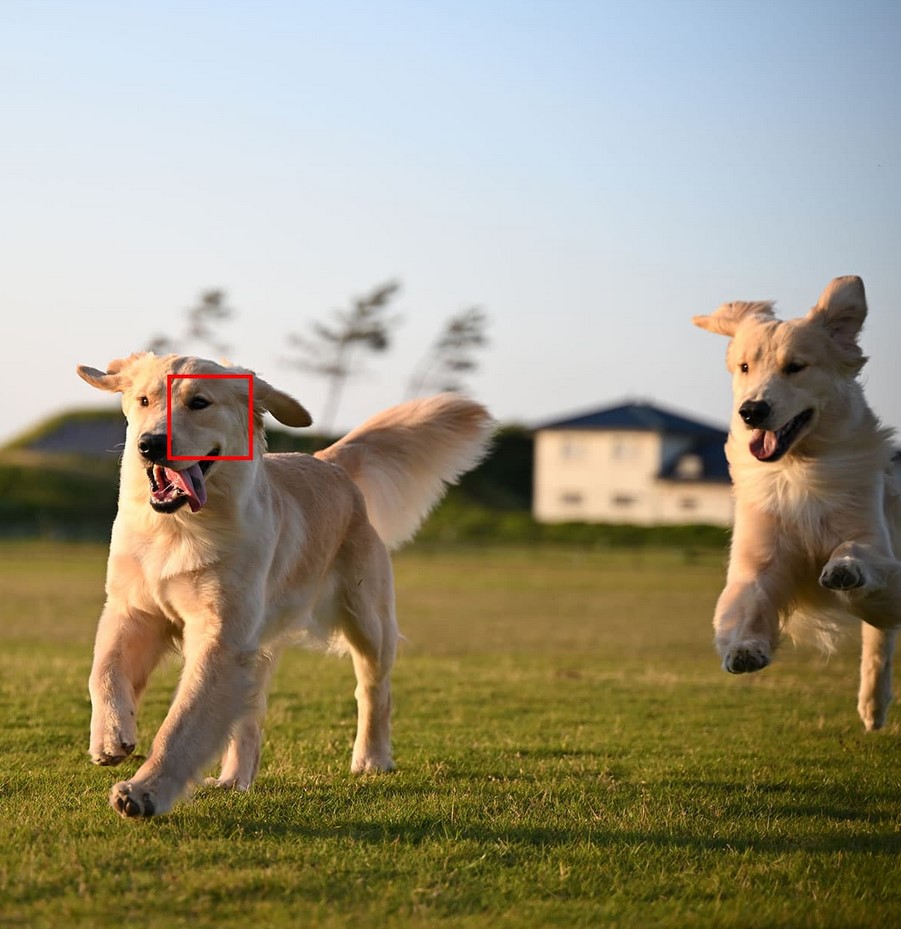
B&W (BLACK & WHITE) MODE
The camera's black and white mode allows selection of shooting and video recording modes, featuring a controller where one can choose from mono profiles, including low contrast "flat mono" and "deep tone mono", which emphasizes red scene details. These profiles can be applied to both photos and video material, highlighting Nikon's focus on the creative process.
NOT JUST PHOTOGRAPH, BUT ALSO FILM
Unlike the Nikon Df, which promised purity in photography by omitting video features, the Nikon Zf is quite capable for filming. It can shoot up to 4K/60 from an APS-C (DX, in Nikon's terms) crop sensor or can shoot 4K up to 30p from the full 6K pixel-wide sensor. Waveforms are also included to help assess video exposure, especially now that we have 10-bit internal recording allowing for "Log" capture.
MULTI-SHOT PIXEL SHIFT
Nikon joins camera manufacturers that utilize image stabilization systems and offers a multi-shot pixel shift mode, where the sensor is moved by precise fractions to capture each color at each pixel location or pixel parts, enhancing the output image resolution. Nikon's system offers four modes, all of which require merging "Raw" files in desktop software: a four-shot mode capturing full color at each point, an 8-shot mode that does this twice to further improve tonal quality and noise, a 16-shot mode that also increases image resolution to 96 MP, and then a 32-shot version that also doubles this resolution.

IMAGE STABILIZATION LINKED TO AF POINT
As companies strive to maximize the performance of their IS systems, it becomes increasingly challenging to offer additional improvements. Nikon claims that the performance of the Nikon Zf is enhanced by linking the IS system with the selected autofocus point. The logic is that tilt and panning movements (tilting up/down and rotating left/right) cause greater image shifts from the center, especially when using wide-angle lenses. The Nikon Zf's IBIS system can use the selected autofocus point as the center of its corrections rather than the center of the image, helping to ensure more effective stabilization when off-center autofocus points are used with wide-angle lenses. This method should help maintain sharpness at the focused point, contributing to the camera achieving an 8 EV stabilization rating when tested under CIPA standards.
DURABLE CONSTRUCTION
The most obvious thing that can be said about the Nikon Zf body is that it closely resembles the "Nikon FM2" film camera from the 1980s. When the two cameras are placed side by side, it is clear that the new camera is larger, but the proportions are maintained, so it still looks like it used to. The construction of the Nikon Zf is primarily made of magnesium alloy (with some plastic plates serving the function of radio windows for "Wi-Fi"), which Nikon claims is "dust and drip resistant." The traditional look means there are no protruding grips, but, like the FM2 and similar vintage cameras, it can be used quite comfortably. The additional few millimeters in depth make it easy to grip, and the dials are well-placed so they can be operated without feeling like you are about to drop the camera. The smaller Nikon Z fc faced criticism for appearing flimsy due to its low weight, and this impression was further exacerbated by its somewhat plastic dials. With the increased weight of the Zf, this issue has been avoided: it appears sturdier, and the tactile feel of the control buttons matches this.
MEMORY CARD SLOTS
Nikon provided the Nikon Zf with two card slots; however, to control its size, it decided that the second card slot would be of the MicroSD type. These cards are quite small, and it can be tricky to insert and remove them from the camera, so it may be prudent to always keep a fast "microSD" card in the camera as a backup instead of planning to remove it frequently. However, the SD slot is compatible with UHS II, while the Micro SD is only compatible with UHS I.

FEATURES
- 24 MP full-frame BSI CMOS sensor.
- In-body stabilization up to 8EV.
- Special monochrome mode.
- Up to 14 frames per second continuous shooting (JPEG), 11 frames per second Raw.
- "C30" JPEG only 30 frames per second mode with pre-shooting function.
- AF system with 9 object type tracking and recognition.
- 4K/60 video recording from 6K recording with 10 bit N-Log recording.
- 32 frames high-resolution mode allowing for 96 MP images.
- SD and MicroSD card slots.
SPECIFICATIONS
Lens mount: Nikon Z mount
Manufacturer: Nikon
Effective pixel count: 24.5 million.
Image sensor size: 35.9 mm x 23.9 mm
Image sensor format: FX
Image sensor type: CMOS
Total pixel count: 25.28 million.
Photo file formats: JPEG: JPEG-Baseline compatible with fine (approximately 1:4), normal (approximately 1:8), or basic (approximately 1:16) compression; size priority and optimal quality compression available; NEF (RAW) + JPEG: one image stored in NEF (RAW) and JPEG formats; NEF (RAW): 14-bit with lossless, high efficiency* or high efficiency compression; HEIF: supports fine (approximately 1:4), normal (approximately 1:8), or basic (approximately 1:16) compression; size priority and optimal quality compression available; NEF (RAW)+HEIF: One image stored in NEF (RAW) and HEIF formats
Memory card type: SD (Secure Digital), SDHC and SDXC memory cards compliant with UHS-1 and UHS-II requirements; microSD cards (microSDHC and microSDXC memory cards compliant with UHS-1 requirements)
File system: DCF 2.0, Exif 2.32, MPEG‑A, MIAF
Viewfinder: approximately 1.27 cm/0.5 in 3690 thousand-dot (Quad VGA) OLED electronic viewfinder with color balance and automatic as well as 13 levels of manual brightness controls; viewfinder frame coverage - approximately 100% horizontally, 100% vertically; viewfinder magnification: approximately 0.8x (50 mm lens at infinity, -1.0 m -1); viewfinder eyepoint: 21 mm (-1.0 m -1; from the surface of the center of the viewfinder eyepiece lens); viewfinder diopter adjustment: from -4 to +2 m-1
Shutter type: electronically controlled vertical travel focal plane mechanical shutter; electronic front curtain; electronic shutter
Shutter speed: using shutter speed dial: 1/8000 to 4 sec. in 1 EV increments, Bulb, Time, X (flash synchronization); using the main command dial: 1/8000-30 s in 1/3 EV increments (can be extended to 900 s in M mode), Bulb, Time, X (flash synchronization)
Exposure metering system: TTL metering using the camera's image sensor
ISO sensitivity: ISO from 100 to 64000 in 1/3 and 1 EV increments; can also be set approximately 0.3, 0.7 or 1 EV (ISO 50 equivalent) below ISO 100 or approximately 0.3, 0.7, 1 or 1.7 EV (ISO 204800 equivalent) above ISO 64000; automatic ISO sensitivity control is available; note: ISO sensitivity is limited to 400-64000 when the tonal mode HLG is selected
Autofocus system: hybrid phase detection / contrast AF with assist AF
Flash control: TTL: i-TTL flash control; i-TTL balanced fill flash used with matrix, center-weighted and spot metering, standard i-TTL fill flash used with spot metering
Video format: 4K UHD 3 840 × 2 160 / 30p / 25p / 24p; Full HD 1 920 x 1 080 / 120p/100p/60p/50p/30p/25p/24p; actual 120p, 100p, 60p, 50p, 30p, 25p and 24p frame rates are approximately 119.88, 100, 59.94, 50, 29.97, 25 and 23.976 frames per second respectively.; 4K UHD 3840 x 2160 / 60p using DX crop
Screen size: 3.2 inches diagonal
Connections: USB Type C (SuperSpeed USB); Type D HDMI connector; Stereo mini-pin jack (3.5 mm diameter; supports power source)
Battery: one EN-EL15c rechargeable lithium-ion battery; EN-EL15b and EN-EL15a batteries can also be used instead of EN-EL15c. However, note that fewer pictures can be taken per charge using EN-EL15b or EN-EL15a compared to EN-EL15c. EH-7P AC charging adapters and EH-8P AC adapters can only be used to charge EN-EL15c and EN-EL15b batteries.
Tripod mount: 1/4 inch (ISO 1222)
Dimensions: approximately 144 mm x 103 mm x 49 mm
Weight: approximately 630 g