





The product's shade and actual color may differ from what is shown in the picture, as the images are for illustrative purposes. The product description is general and may not include all the product's features.
Solarix installation cable Solarix SSTP, Cat7, solid, LSOH, 500 m reel SXKD-7-SSTP-LSOH
3847546 27000007
8595684701036
Shipping 7-12 b.d.
All about the product
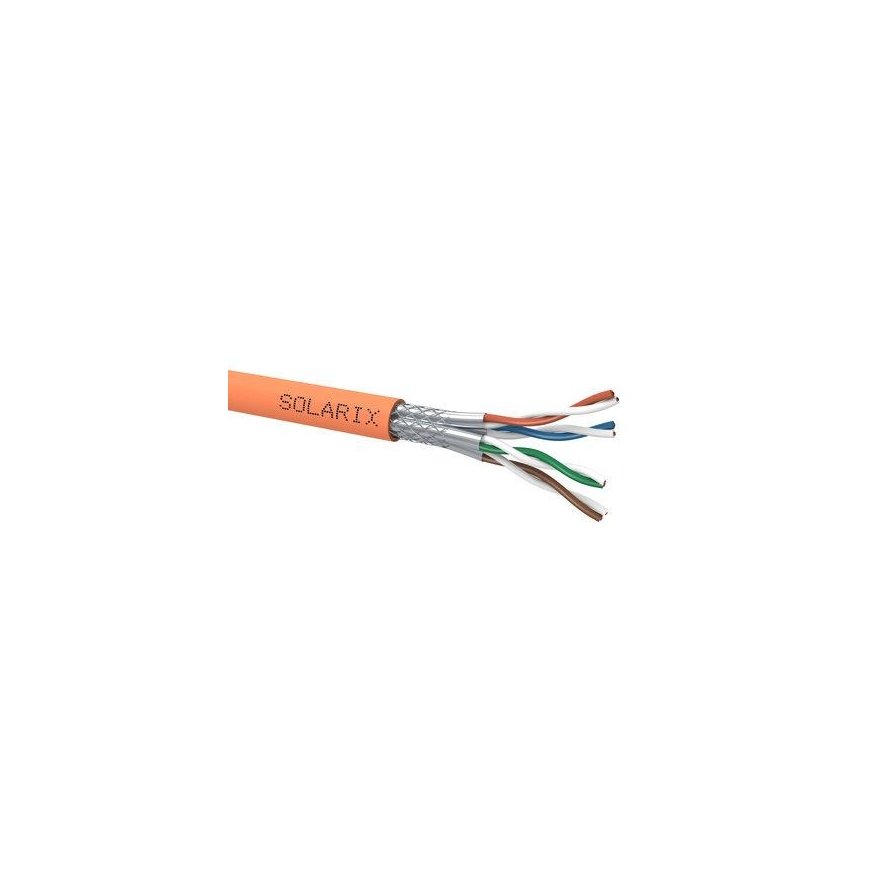
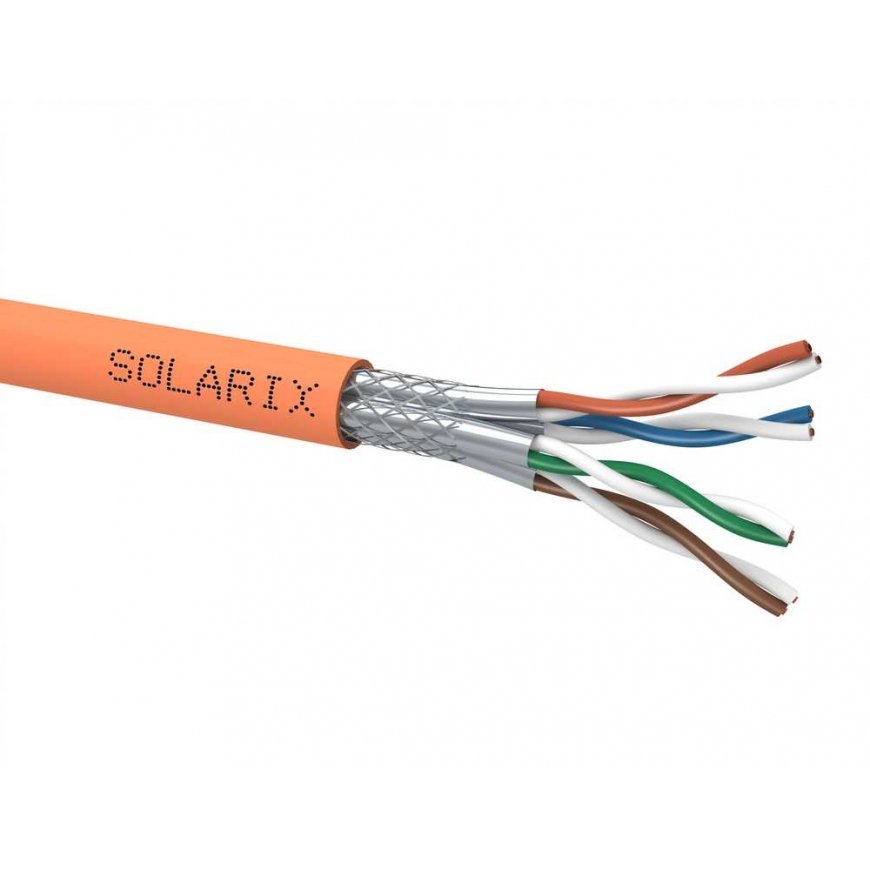
The SXKD-7-SSTP-LSOH cable is a four-pair CAT7 installation cable with double shielding (i.e., aluminum foil around each pair and braid around all pairs), designed for very demanding applications. This cable exceeds the CAT7 requirements specified in the international standards EN 50173 and ISO 11801. The cable has been tested not only up to 600 MHz frequency band, as required by the standard, but even up to 900 MHz frequency band. The cable conductors are made of high-quality AWG 23 copper wire with polyethylene insulation; the sheath type is LSOH. The Solarix - CAT7 installation cable is suitable for even the most demanding protocols for metallic lines, as well as for the emerging high-speed 10GBaseT protocol, which may not always operate fully with all types of metallic cables. The cables are marked with a 1 m length gauge. Solarix LSOH installation cables comply with the following standards: A) Acidity of gases released during burning IEC 60754-2: Testing of gases released during the burning of electrical cables. Part 2: Determination of the acidity of gases released during the burning of materials taken from electrical cables by measuring pH and conductivity EN 50267-2-2: General cable testing methods under fire conditions. Testing of gases released during the burning of materials taken from cables. Part 2: Procedures. Determination of the acidity of gases released during the burning of cable materials by measuring pH and conductivity EN 50267-2-3: General cable testing methods under fire conditions. Testing of gases released during the burning of cable materials. Part 3: Procedures. Determination of the acidity of gases released during the burning of cable materials, determining the weighted average pH and conductivity of composite materials (B) Smoke density IEC 61034-2: Measurement of smoke density of cables burning under specified conditions. Part 2: Test procedure and requirements IEC 61034-2: Measurement of smoke density of cables burning under specified conditions. defined conditions - Part 2: Test procedure and requirements (This standard replaced EN 50268-2) (C) Flame resistance of single insulated cables / flame spread IEC 60332-1-2: Testing of electrical and optical fiber cables under fire conditions - Part 1-2: Vertical flame spread test for a single insulated wire or cable - 1 kW premixed flame procedure EN 60332-1-2: Testing of electrical and optical fiber cables under fire conditions - Part 1-2: Vertical flame spread test for a single insulated wire or cable - 1 kW mixed flame procedure (amended by this standard EN 50265-2-1) Category: CAT7 Maximum supported protocol [?]: 10GBaseT Maximum theoretical speed achievable by the cable Shielding: foil around each pair and braid Bandwidth [?]: 900 MHz Possible bandwidth Conductor [?]: 0.58 mm AWG 23 Conductor type and diameter Insulation [?]: 1.4 mm polyethylene Insulation type and diameter Sheath [?]: LSOH Sheath type Color: orange Cable diameter: 7 mm Weight: 65 kg/km NVP [?]: 79 % Nominal propagation speed – the ratio of signal speed in the cable to the speed of light in percentage Propagation delay [?]: 427 ns/100 m Signal delay in one pair Delay skew [?]: 12 ns/100 m Signal delay difference between the fastest and slowest pair Storage temperature: from -20 °C to 60 °C Operating temperature: from -20 °C to 60 °C Installation temperature: from 0 °C to 50 °C