

Electricity futures in the Nordic energy zone currently suggest that autumn 2026 prices could be noticeably higher than last year - by some estimates, up to 70%. For Estonia this hits twice as hard: the country depends on energy imports for about 40%, so any spike in the regional exchange price shows up on local bills almost immediately. Since the start of 2026, Elering added two new charges to the bill - a supply reliability fee and a balancing capacity fee - together adding roughly 3-4 € a month to an average household.
The difference between a "bad" and a "good" appliance is clearly visible on the bill. A fridge runs 24/7, 365 days a year; a washing machine and dishwasher heat water - the most expensive part of the cycle; and an old incandescent bulb uses 8-10 times more energy than an LED of the same brightness. Below we cover how to read the A-G energy classes, what to pick among fridges, washing machines and dishwashers, why a portable power station is useful at home, and how smart meters show where the kilowatts actually go.
What do the A-G energy classes mean and why aren't they like before
Since 1 March 2021, the EU has used a new A-G energy efficiency scale, replacing the old A+++/A++/A+/A/B/C/D system. The reason is simple: the old scale got "overcrowded" - manufacturers raised efficiency so much that almost all appliances ended up in A+ and above, and the label stopped telling buyers anything useful. Classes A and B on the new scale are deliberately left mostly empty - reserved for future appliances.
In practice this means an old A+++ model could now be rated C or even D on the new scale - the appliance itself hasn't changed, only the counting rules have. That's why most modern appliances today honestly show D, E or even F on the label, and that doesn't mean the model is bad. Look not just at the letter, but at the annual consumption in kWh, which manufacturers must state next to the class.
The fridge: the main consumer that never rests
A fridge is the only major appliance that runs 24 hours a day, all year round, so even a small difference in energy use is more noticeable here than with a washing machine that runs a couple of hours a week. Modern fridges increasingly use an inverter compressor: instead of sharp "full power - off" cycles, it smoothly adjusts cooling speed to the current load. According to compressor manufacturers (e.g. Danfoss), this saves 20 to 40% of electricity compared to a conventional compressor, while also reducing noise and wear.
The store's catalogue includes a freestanding Bosch Serie 4 KGN39VIEB fridge - 368 L, class E, stainless steel, 466.94 € - a full-size model with a freezer compartment for a family. Compare models of the same class by annual kWh consumption from the product spec sheet, not just by the letter, and by the volume a household actually needs: an oversized fridge for one person wastes electricity even if formally efficient.
Washing machine and dishwasher: where the class difference hides
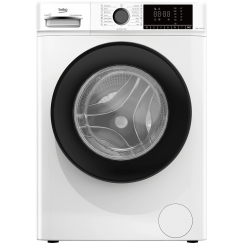
In a washing machine, the main electricity cost is heating water: the higher the wash temperature, the more kilowatts used, so modern machines with efficient programs and a good spin speed (1400 rpm versus a standard 1000-1200) let you rely less on the dryer. Among washing machines in the catalogue there are two front-load, 7 kg, 1400 rpm models: Samsung WW70FG3M05AW at 251.83 € and Beko B1WFM2741WBEE at 289.52 € - both suit a family of 2-4, and the main difference is brand and program set.
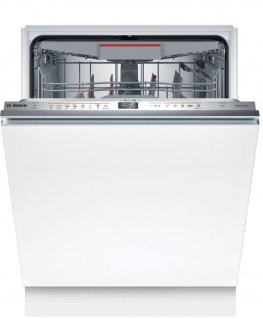
With dishwashers the class difference is much more noticeable than with fridges or washers, because the range of realistically available classes is wide - from A down to D and lower. This is visible in two built-in Bosch models for 14 place settings: Bosch Serie 6 SBD6ECX12E - class A, the best available efficiency class for dishwashers, 692.74 €, and Bosch Serie 4 SMV4HVX07E - class D, 362.10 €. The price gap between them is about 330 €, and it doesn't pay back instantly, but over several years of daily use the higher class gradually recoups the extra cost through lower water and electricity use for heating.
Portable power stations: a backup for outages and grid spikes
A portable power station is essentially a large battery with an inverter and a set of outlets that charges from the mains or a solar panel and can power appliances at home during an outage. Unlike a petrol generator, it runs silently, needs no fuel or ventilation, and can sit indoors.
All EcoFlow models in the catalogue use LiFePO4 (lithium iron phosphate) batteries - a subclass of lithium batteries that is significantly more reliable and durable than the standard lithium-ion (NMC) used in most power banks and laptops. According to manufacturers, LiFePO4 batteries handle roughly 3000-6000 full charge-discharge cycles versus 500-2000 for regular Li-ion, translating to 8-10 years of service instead of 2-3, plus higher thermal stability.
The EcoFlow line in the catalogue has four models: EcoFlow RIVER 3 - 300 W, 3.55 kg, 229.65 € - the budget entry point, enough to charge phones, a laptop, a router and lights for a few hours during a short outage; EcoFlow River 3 Max - 4.7 kg, 458.87 € - more capacity for longer autonomy; EcoFlow DELTA 3 Plus - 1800 W, 12.5 kg, 692.74 € - enough power to briefly run a fridge during a long outage; EcoFlow DELTA 3 Max - 20.3 kg, 886.29 € - the flagship model for home or workshop, capable of keeping several appliances running at once.
Smart meters and outlets: seeing what actually eats electricity
Without measurement, savings talk usually comes down to guesswork - it seems like the old fridge is to blame, while in reality underfloor heating eats the biggest share of the bill, for example. Smart energy meters install at the flat or house input and show consumption by phase in real time through a phone app.
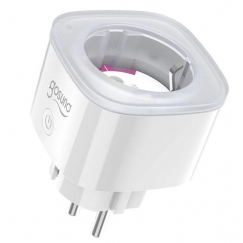
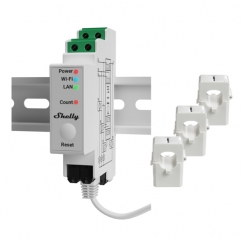
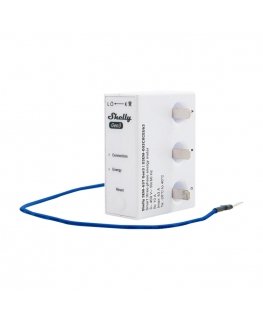
The catalogue has the Shelly Pro 3EM AC energy meter at 83.45 €, and the Shelly 3EM-63T Gen3 WiFi energy meter at 79.84 € - both measure consumption across three phases, useful for a house with a three-phase connection. For spot checks, a smart outlet with consumption metering like the Gosund EP8, 3680 W, at 23.39 €, works well - move it between appliances and in a week or two you'll know which one really drives the bill.
Lighting and heating: small things that add up to kilowatts
Replacing incandescent bulbs with LED is the fastest-paying measure at home: an LED bulb of the same brightness uses 8-10 times less energy and lasts far longer. The catalogue has the Immax NEO LITE Smart LED E14 6W RGB+CCT, dimmable, WiFi-controlled, 15.32 € - lets you adjust brightness and schedule; and the simpler Osram Parathom Reflector LED GU10, 6.1 W, 7.44 € - without smart features, but the same savings compared to old halogen bulbs.
Heating is the opposite case: an electric heater is one of the most power-hungry appliances at home if left running unmonitored. A ceramic heater with remote control, the Adler AD 7756 at 31.45 €, lets you set the exact temperature and a timer instead of running it at maximum all evening.
Model comparison by key parameters
| Product | Category | Key parameter | Price |
|---|---|---|---|
| Bosch Serie 4 KGN39VIEB | Fridge | 368 L, class E | 466.94 € |
| Samsung WW70FG3M05AW | Washing machine | 7 kg, 1400 rpm | 251.83 € |
| Beko B1WFM2741WBEE | Washing machine | 7 kg, 1400 rpm | 289.52 € |
| Bosch Serie 6 SBD6ECX12E | Dishwasher | 14 place settings, class A | 692.74 € |
| Bosch Serie 4 SMV4HVX07E | Dishwasher | 14 place settings, class D | 362.10 € |
| EcoFlow RIVER 3 | Portable power station | 300 W, 3.55 kg, LiFePO4 | 229.65 € |
| EcoFlow River 3 Max | Portable power station | 4.7 kg, LiFePO4 | 458.87 € |
| EcoFlow DELTA 3 Plus | Portable power station | 1800 W, 12.5 kg, LiFePO4 | 692.74 € |
| EcoFlow DELTA 3 Max | Portable power station | 20.3 kg, LiFePO4 | 886.29 € |
| Shelly Pro 3EM | Energy meter | AC, 3-phase | 83.45 € |
| Shelly 3EM-63T Gen3 | Energy meter | WiFi, 3-phase | 79.84 € |
| Gosund EP8 | Smart outlet | 3680 W, consumption metering | 23.39 € |
| Immax NEO LITE Smart LED E14 | Lighting | 6W, RGB+CCT, dimmable, WiFi | 15.32 € |
| Osram Parathom Reflector LED GU10 | Lighting | 6.1 W | 7.44 € |
| Adler AD 7756 | Heater | Ceramic, remote control | 31.45 € |
Is class E bad for a fridge?
No - after the 2021 scale reset, classes A and B are deliberately left mostly empty on the new label, and most modern fridges honestly land in the C-F range. Look at the annual kWh consumption in the product spec sheet, not just the letter.
Do I need a portable power station in a flat if outages are rare?
If outages are short and rare, a compact model like the EcoFlow RIVER 3 at 229.65 € is enough for a phone, router and lights - keep it charged in a cupboard and use it for trips or a summer house too. For more serious autonomy, you need a more powerful model from the DELTA line.
Where do I start if I want to know what to save on first?
Start with measuring: a smart meter at the input (Shelly Pro 3EM or Shelly 3EM-63T Gen3) or a Gosund EP8 smart outlet on a suspect appliance will show the real consumption picture within one to two weeks - often different from what it looks like by eye.
Key takeaways
- Electricity in Estonia and the Baltics is getting more expensive - autumn 2026 exchange prices could be noticeably higher than last year, and Elering added two new charges to the bill since the start of the year.
- The A-G classes read differently since the 2021 reset - go by annual kWh consumption from the spec sheet, not the letter.
- The fridge runs around the clock and deserves special attention to energy use.
- Dishwashers show the most noticeable class difference - from A down to D and lower - and here the extra cost for a higher class pays back faster than in other categories.
- A LiFePO4 portable power station and a smart consumption meter serve different jobs: one gives you an energy reserve, the other shows where it goes.
Related products
- -11%
1476096 - -1%
1769427138,53 € 2,00 € 136.53 €Monthly payment from 4,42 €MPN: 095-1395AC,... 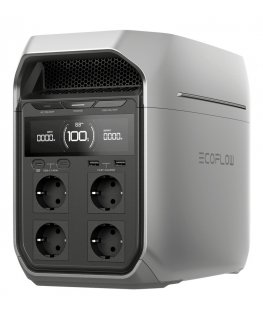
3460479832.35 €Monthly payment from 22,33 €MPN: EFDELTA3P-EULiFePO4,...- -7%
3609970859,00 € 60,00 € 799.00 €Monthly payment from 21,47 € - -9%
369305197,89 € 8,88 € 89.01 €Monthly payment from 3,19 €MPN: 3EM-63TGen3Shelly 3EM-63T Gen3 measures electricity consumption from three phases accurately and in real time with a Wi-Fi connection. The device stores measurement data for up to five years and is widely compatible with various smart home and smart building syste... 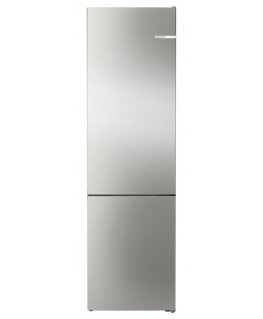
3920310699.00 €Monthly payment from 18,90 €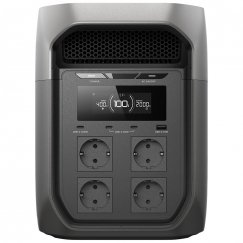
40387831 589.00 €Monthly payment from 41,82 €MPN: EFD3M-G-EU-CBOXEcoFlow...
4080571- -11%
4102713359,00 € 40,00 € 319.00 €Monthly payment from 9,11 €MPN: B1WFM2741WBEE 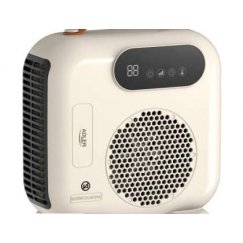
416552629.00 €MPN: AD7756Adler LED Fan Heater with Remote Control | AD 7756 | Fan heater | 2000 W | Beige | I...