




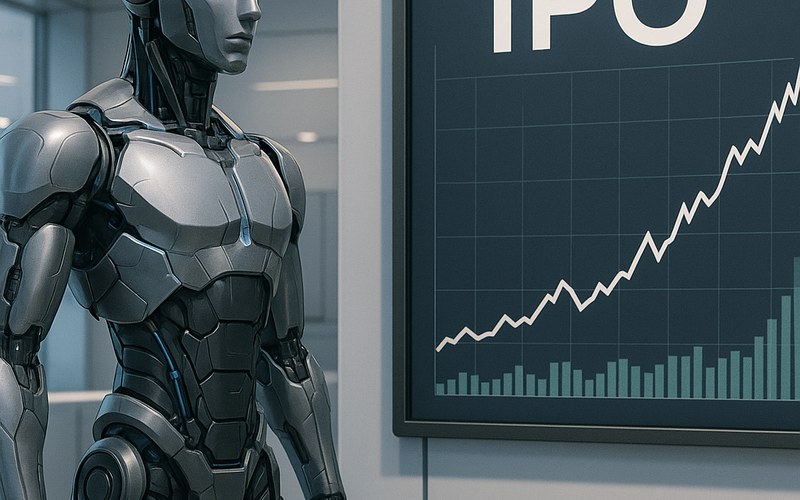
Unitree is a Chinese robotics company from Hangzhou that shipped over 5,500 humanoid robots in 2025, becoming the world's leading humanoid robot maker by volume; on August 7, 2026, the company announced its IPO price on Shanghai's STAR Market at a valuation of roughly $9 billion - the first public listing by a mainland Chinese humanoid robot manufacturer.
Who is Unitree and why is everyone talking about it in 2026?
Unitree Robotics is based in Zhejiang province and started with quadruped robot dogs before expanding into humanoid robots from 2023-2024 onward. In 2025 the company's revenue grew more than 4x to 1.7 billion yuan, with humanoid robot sales (867.8 million yuan) overtaking its classic robot-dog business for the first time. On August 7, 2026, Unitree announced its IPO price of 150.80 yuan per share, with subscription opening August 10 and payment due by August 12.
What humanoid models does Unitree make?
Unitree's lineup spans prices from $4,900 to $68,900 - from an educational platform to a flagship built for industrial research. Key models and specs:
| Model | Price | Height | Weight | Degrees of Freedom | Purpose |
|---|---|---|---|---|---|
| R1 | from $4,900 | 1.20 m | 25 kg | 26 | Training, demos |
| G1 | from $13,500 (EDU from $43,900) | 1.32 m | ~35 kg | 23-43 | Research, best-selling model |
| H2 | $40,900 (EDU $68,900) | 1.82 m | ~70 kg | 31 | Flagship, full human height |
| H2 Plus | expected late 2026 | ~1.80 m | ~68 kg | 75 | Research platform on Nvidia Isaac GR00T |
What are Unitree robots actually used for today?
Only 9% of Unitree's sales go directly to industrial applications, another 17% to commercial spaces like exhibitions and retail stores; the rest is bought by universities and research labs to test perception systems and control algorithms. On typical warehouse and factory tasks like carrying and stacking boxes, the robots currently perform at 30-50% of human efficiency.
What did Unitree's August 2026 IPO reveal?
Unitree's IPO on Shanghai's STAR Market was the first public listing by a mainland Chinese humanoid robot manufacturer, valuing the company at roughly $9 billion. Strategic investors in the offering include Chinese AI company DeepSeek. The company forecasts first-half 2026 revenue growth of 35.6-45.4% year-over-year.
The bottom line
- Unitree is the world's leading humanoid robot maker by shipment volume: over 5,500 units in 2025.
- The lineup spans prices from $4,900 (R1) to $68,900 (H2 EDU) - an order-of-magnitude range for different needs.
- On August 7, 2026, the company announced its IPO price on the Shanghai exchange, valuing it at roughly $9 billion.
- Real industrial adoption is still limited (9% of sales) - most robots are used in research and demos today.
- The next major release is H2 Plus on Nvidia Isaac GR00T, expected by the end of 2026.
How much does a Unitree humanoid cost?
Prices range from $4,900 for the entry-level educational R1 model to $68,900 for the flagship H2 EDU version with full SDK and ROS 2 support. The best-selling G1 model starts at $13,500.
When did Unitree go public?
The IPO price was announced on August 7, 2026 - 150.80 yuan per share, valuing the company at roughly $9 billion. Subscription opened on August 10, with payment due by August 12, 2026.
Can a Unitree robot replace a human on a factory floor?
Not yet: on typical warehouse and factory tasks, the robots perform at 30-50% of human efficiency, and direct industrial applications account for only 9% of the company's sales.
How is H2 Plus different from H2?
H2 Plus is a research platform built on Nvidia Isaac GR00T with 75 degrees of freedom (versus 31 for H2), tactile five-finger hands, and an onboard Nvidia Jetson AGX Thor computer; it is expected to launch by the end of 2026.
How many humanoids did Unitree sell in 2025?
Over 5,500 units - more than any other humanoid robot maker in the world, making Unitree the market leader by shipment volume.