

2026 quietly became the year of smart glasses
While everyone was focusing on foldable smartphones, the hottest race unfolded right on the bridge of the nose. Meta is already raising funds, Samsung is preparing a response by July 22, Google is building a brand alliance. Meanwhile, Apple is unexpectedly lagging behind.
Meta set the bar
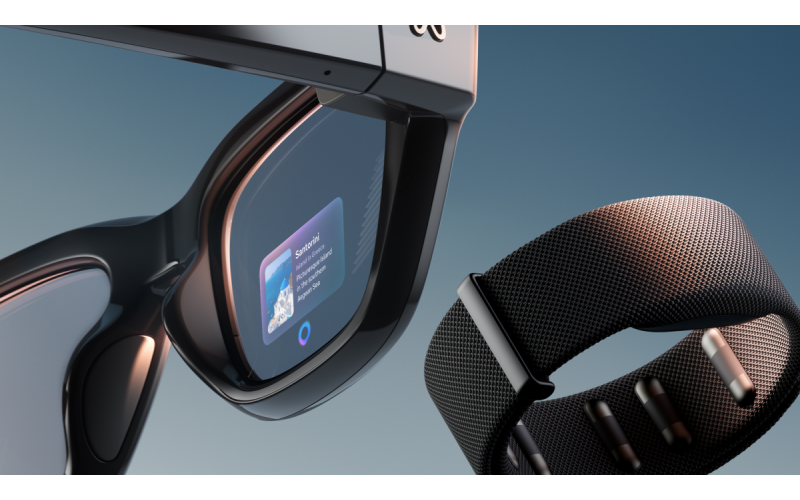
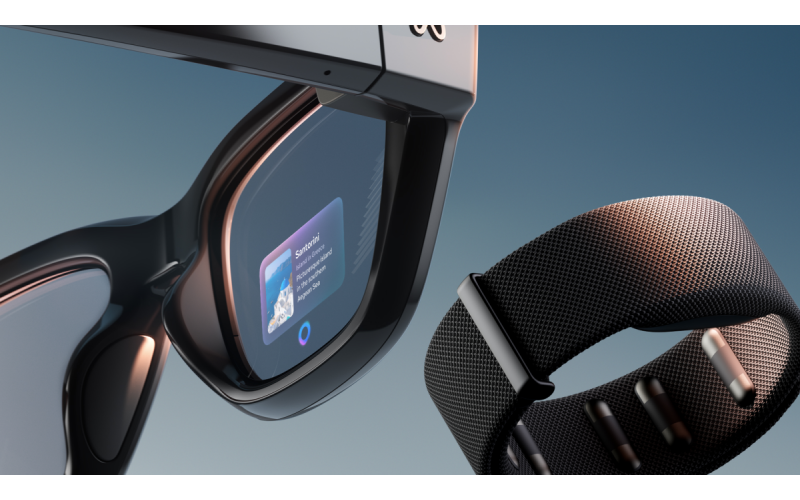
Ray-Ban Meta II starts at $379, Oakley Meta - from $399. The flagship Ray-Ban Display will cost $799: a monochrome display in the right lens, a Neural Band bracelet. You scroll through the menu with a barely noticeable finger movement on the wrist, not raising your hand to the frame.
What the glasses can do right now: translate conversations live (up to 6 languages, some work offline), provide hints about what you see, answer questions via Meta AI. There is a version with prescription lenses for those who already wear glasses.
The results are evident: sales in 2025 grew more than threefold, Meta holds over 70% of the market. However, in January 2026, the company postponed the launch in the UK, France, Italy, and Canada: there were insufficient supplies.
Samsung launches on July 22
Galaxy Unpacked will take place in London. Leaks describe the Galaxy Glasses as follows: Qualcomm Snapdragon AR1 chip, 12 MP camera, weight around 50 grams, no display in the lens. They are controlled by voice and a touch panel on the arm, with Google Gemini as the assistant and Gentle Monster responsible for design. Expected price is $379-499.
Behind this is a broader alliance: Google is building the Android XR platform, and brands are competing in design - Warby Parker, Gentle Monster, potentially Gucci. It's just like it was with Android for smartphones: one OS, different frames.
Apple takes a pause
According to Bloomberg and analyst Ming-Chi Kuo, Apple's smart glasses (code name N50) have been pushed to the end of 2027. The reason is that the visual AI based on the updated Siri is still not up to par. It's a rare case when Apple is catching up to others rather than setting the pace.
Why now, not 10 years ago?
The 2013 Google Glass at $1500 failed for a simple reason: it was expensive, unclear why it was needed, and it looked strange. The lesson has been learned. Now electronics are hidden in regular Ray-Ban and Oakley frames, and fashionable houses like Gentle Monster and Gucci are invited to collaborate on the development. The form factor is more likely to attract buyers than repel them.
The market is responding with growth. IDC estimates the shipments of smart glasses for 2026 to be around 13.6 million units. Smart Analytics Global expects that revenue for the year will rise from $1.2 to $5.6 billion.
There is also a downside: a camera on the face raises privacy concerns. In Pennsylvania, they are already considering a bill that would require keeping the recording indicator on. The debate about where convenience ends and surveillance begins is just heating up.
Should you buy now or wait?
If you need a first-person camera and an AI assistant in a familiar frame, Meta Glasses are already a mature product, it can be purchased. Those who value the connection with Android and Gemini should wait for details from Samsung after July 22. And full-fledged AR glasses with a transparent display at a reasonable price will be on the horizon for 2027-2028.
One thing is clear: the category that has been buried for years can be considered matured in 2026. And it seems this is here to stay.
Look for smart glasses, smartwatches, and other wearable electronics in our catalog - we monitor new releases and add them as they come out.