

Heating Is On, Air Is Dry: How to Choose a Humidifier for a Kid's Room This Autumn in Estonia
A humidifier for a child's bedroom keeps humidity at 40-50% in the room where the child sleeps, offsetting the drying effect of radiators. Estonia's official heating season runs from October 1 to April 30, and during these months relative humidity in apartments drops to 20-25%. In Estonian stores such devices cost from 27 to 154 € with VAT: the range depends on tank size and spray type, and at the top end also on automation features.
Key takeaways
- Estonia's heating season officially runs from October 1 to April 30, and these are the driest months indoors.
- Comfortable humidity for a child's room is 40-50%; with radiators running it often drops to 20-25%.
- Cold-mist humidifiers - ultrasonic or evaporative - are the safe choice for a child's room. Pediatricians advise against steam models with boiling water due to burn risk.
- A 3-5 liter tank covers a 10-15 m² room for a full night without refilling.
- Prices in Estonian stores start at 26.77 € for a compact ultrasonic model and reach 150+ € for units with a hygrostat and quiet night mode.
When does the heating season start in Estonia and why does it dry out the air?
Estonia's heating season officially runs from October 1 to April 30, dates set in district heating legislation. In practice, radiators go on earlier if it turns cold sharply already in September: in centrally heated buildings, management companies watch average daily temperature, not just the calendar. Once heating kicks in, relative humidity indoors falls. Warm air can hold more water vapor, but the absolute amount of moisture doesn't increase, so the percentage drops: in winter, heated apartments often sit at 20-25% instead of a comfortable 40-50%.
What humidity level does a child's room need?
For a child's room, the target is 40-50% relative humidity. That's slightly above the general range for living spaces (40-60%): children's mucous membranes are thinner, so dry air irritates the airways more, triggering night coughing. Below 30% the nasal lining dries out and susceptibility to colds rises; above 60% conditions favor mold and dust mites. A hygrometer shows the exact figure - some humidifiers have one built into the control panel.
What types of humidifiers exist, and which one is safe for a child's room?
Household humidifiers work on three main principles, and not all of them suit a child's room.
- Ultrasonic - water is sprayed by a vibrating membrane into cold mist. Quiet and energy-efficient, but with hard water they leave white mineral dust on furniture, so filtered or demineralized water is recommended.
- Evaporative - a fan pushes air through a wet filter or wick. This type naturally won't over-humidify a room past a certain point and leaves no mineral dust, but the filter needs periodic replacement.
- Steam - water boils and hot steam enters the room. Microbiologically the steam is cleaner, but the housing and the outgoing jet are hot: a child could tip the unit over or touch it and get burned. Pediatricians, including the American Academy of Pediatrics, recommend cold-mist devices - ultrasonic or evaporative - for a child's room.
How do you pick a humidifier by room size and tank volume?
For a typical 10-15 m² child's room, a 3-4 liter tank is enough for a full night without refilling. For a larger room, from 18-20 m², a model with a 4.5-5 liter tank is better. Two features are essential in a child's room. First, auto shut-off when the tank runs dry, protecting both the unit and the child from overheated plastic. Second, a built-in hygrostat that maintains a set humidity level on its own and prevents over-humidifying the air.
How much does a humidifier for a child's room cost in Estonia, and which model to choose?
The cybermarket.ee catalog has cold-mist models for every budget, from compact ultrasonic units to devices with a hygrostat and quiet mode:
| Model | Type | Tank | Power | Price, € (VAT incl.) |
|---|---|---|---|---|
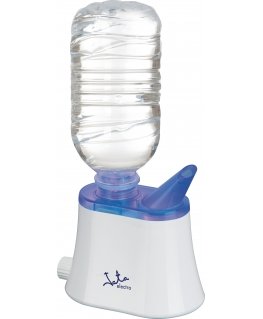
| JATA HU992 | Ultrasonic | - | 15 W | 26.77 |
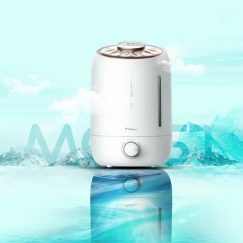
| Deerma F500 | Ultrasonic | 5 L | 25 W | 28.81 |
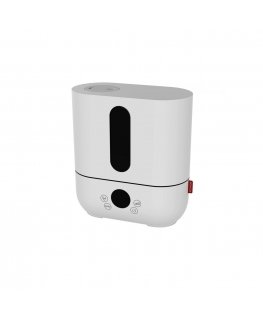
| Boneco U250 | Ultrasonic | 3.5 L | 20 W | 139.00 |
| Philips 5000 series HU5710/03 | Ultrasonic | 4.5 L | 14.1 W | 154.00 |
The most affordable options - JATA HU992 and Deerma F500 - cost under 30 €: basic functionality, but the tank covers a full night. Models from 139 € (Boneco, Philips 5000 series) add a hygrostat, low fan power draw, and refined quiet operation - the most important factor for a child's room, since the child sleeps right next to the unit all night.
What else should you check when choosing a humidifier for a child?
- Noise level in night mode: if decibel figures are listed, look for a value closer to the lower end of the model's range.
- Indicator and night-light illumination should dim or turn off completely, otherwise it disrupts sleep.
- The tank should disassemble easily for cleaning: water in a humidifier should be changed daily, and the tank itself washed several times a week, otherwise stagnant water breeds bacteria and mold.
- Estonia's hard tap water means ultrasonic models need more frequent descaling, or a switch to filtered water.
What humidity should a child's room have in winter?
40-50% relative humidity. A hygrometer - standalone or built into the humidifier - shows the exact figure.
Can you put a steam humidifier in a child's room?
Pediatricians advise against steam models for a child's room because of the burn risk from hot steam or the housing if the unit tips over. For a room where a child sleeps, choose an ultrasonic or evaporative cold-mist humidifier instead.
When does the heating season start in Estonia?
Officially, from October 1 to April 30, per district heating legislation. If it turns cold early, heating in some buildings starts before the calendar date.
How often should you change the water in a humidifier?
Daily. Stagnant water breeds bacteria and mold, which enter the room's air along with the steam or mist. The tank should be washed several times a week.
Is one humidifier enough for a whole apartment?
No, tank volume and spray power are sized for a specific area. A unit works best in the room where it's placed - for a child's room, keep it there directly rather than in the hallway or living room.
For a child's room, the spray type - cold mist versus boiling steam - is the deciding spec. Check that line before tank volume and price.