

Cybermarket is seeing a sharp rise in interest in EcoFlow: sales of power stations across several product lines - from compact power banks to serious home backup units - have jumped. Different price ranges, different use cases, but the same brand keeps coming up. For a store, that's a clear signal: interest in backup power has suddenly woken up, right at the end of summer.
A sharp sales jump - and across several different models at once
It's not about one popular item. Recently Cybermarket has sold units from several EcoFlow lines at once - from the affordable River series to the flagship Delta Max Plus. Different price categories, different use cases, but the choice keeps landing on this one brand. Late August and early September are when the summer-house season winds down and thoughts about winter and possible power cuts creep back in. Some people are stocking up on home gear before the cold sets in, others are planning one last trip into the woods - and increasingly they're picking EcoFlow for it.
Why EcoFlow is suddenly the topic
EcoFlow entered the market in 2017 as a maker of portable power stations and within a few years became synonymous with 'home backup energy' in buyers' minds. That's not just clever marketing. The brand covers several scenarios with the same product language: a blackout in an apartment, a power cut at the summer house, camping, charging gadgets on the road, or a whole-home backup setup via the Smart Home Panel line wired into the fuse box.
In the Baltics this topic hits harder than in many other parts of Europe. Periodic power outages after storms, grid maintenance work, and the popularity of summer houses and camping all make a portable power station look like a practical purchase for when the lights actually go out, not just a gadget for enthusiasts. On top of that, late summer is the traditional season for getting the summer house ready for winter and squeezing in one last trip outdoors, which is usually when demand for this kind of device rises.
The technology behind EcoFlow's reputation
LiFePO4: a battery that outlasts several regular ones
Every current EcoFlow station is built around lithium iron phosphate (LiFePO4) cells instead of the regular lithium-ion battery found in most power banks and cheaper alternatives. The difference in lifespan is significant. A typical consumer-grade lithium-ion battery handles roughly 500-800 full charge cycles before its capacity noticeably degrades, while LiFePO4 cells in EcoFlow stations are rated for 3,000 cycles or more. Some flagship models in the lineup are rated for several thousand cycles before dropping to half their original capacity. In everyday use, that means the station simply lasts much longer. The battery is also more thermally stable, since the iron-phosphate structure is chemically sturdier than regular lithium.
X-Stream: fast charging for the station itself
EcoFlow's second signature technology is X-Stream, fast charging of the station itself from a wall outlet. On the Delta 3 Classic, charging from 0 to 80% takes about 45 minutes, with a full charge taking around an hour. This works because the proprietary electronics safely raise voltage and current during charging, speeding up the process without risking the battery or shortening its lifespan. Many budget alternatives take 4-6 hours to charge. You can plug an EcoFlow station in before work in the morning and unplug it fully charged by lunchtime.
Solar, the app, and the Smart Home Panel
Every station in the lineup is compatible with EcoFlow solar panels, which for camping or a summer house means charging without an outlet at all, as long as the sun is out. A dedicated smartphone app shows charge level and power draw and lets you control the station remotely. For anyone who needs a permanent home backup, EcoFlow offers the Smart Home Panel line. It wires directly into the fuse box and switches selected circuits over to the station the moment power goes out. On the top-tier panel versions this happens in a fraction of a second, so a power cut is barely noticeable, and a single panel can manage dozens of household circuits at once.
The EcoFlow lineup: from a backpack pocket to the fuse box
Compact units for hiking and the trunk
The TRAIL 200 DC (149 €, 1.83 kg) and TRAIL 300 DC (199 €, 2.58 kg) are the lightest stations in the range. They suit fishing trips and hikes, and also the car: charging a phone and a flashlight, or running a small cooler on the road. Both models use the same LiFePO4 battery as the larger stations, just in a compact form factor.
Budget and mid-range segment
The RIVER 3 UPS (257.99 €, 3.55 kg) stands out for its UPS mode: if the power goes out, the station instantly picks up the load, which is handy for a router or a computer that can't just be switched off. The River 2 Max (354.09 €, 6 kg) is one of the models seeing rising demand lately, with just 5 units currently in stock. The River 2 Pro (515.72 €, 7.8 kg) sits a step above it in power, for anyone who finds the River 2 Max's capacity too limited.
Home backup: mid-tier class
This is where stations start earning a role as a real backup power source for an apartment or house. The Delta 3 Classic (585.19 €), with 1 kWh of capacity, is another model with rising demand, currently at 13 units in stock. The Delta 2 (627.38 €, 12 kg) and Delta 3 (679 €, 12.5 kg) have inverter output of 2200 W and 1800 W respectively, enough for most household appliances, including some heaters and kettles. The Delta 3 Plus (869.17 €, 12.5 kg, 1800 W) is particularly well stocked right now, with 227 units on hand, so finding one won't be a problem.
Top and premium tier: for the home, construction sites, and long-term backup
The Delta 3 Max (1229 €, 20.3 kg) and Delta 3 Max Plus (1259 €, 22.1 kg) are the flagship stations of the Delta 3 line. The Delta 3 Max Plus is being snapped up especially fast - at the time of writing it's sold out, with 0 units in stock and a restock expected. The Delta 2 Max (1344.99 €, 23 kg, 2400 W) is an alternative in the same power class. The most powerful station in the lineup is the Delta Pro 3 (2817.35 €, 51.5 kg, 4000 W), built to keep a home running through a full day or more of a total power outage, especially paired with solar panels or a Smart Home Panel.
Solar panels: power when there's no outlet
For camping, a summer house without stable electricity, or simply to extend runtime, EcoFlow stations can be paired with a solar panel. There are currently four options: the foldable 160W Foldable (269.01 €), the lighter 220W Lightweight Portable (419 €), the more powerful 400W Lightweight (669 €), and the Trina Solar EcoFlow 520W (149 €). The last one has one of the lowest price-per-watt ratios in the lineup and pairs well with mid- and high-tier stations that need to refill a large capacity quickly.
| Model | Power / capacity | Weight | Price, € (incl. VAT) | In stock |
|---|---|---|---|---|
| TRAIL 200 DC | 220 W | 1.83 kg | 149.00 | 109 units |
| TRAIL 300 DC | 300 W | 2.58 kg | 199.00 | 71 units |
| RIVER 3 UPS | 300 W, UPS mode | 3.55 kg | 257.99 | 48 units |
| River 2 Max | - | 6 kg | 354.09 | 5 units |
| River 2 Pro | 800 W | 7.8 kg | 515.72 | 4 units |
| Delta 3 Classic | 1 kWh | - | 585.19 | 13 units |
| Delta 2 | 2200 W | 12 kg | 627.38 | 42 units |
| Delta 3 | 1800 W | 12.5 kg | 679.00 | 49 units |
| Delta 3 Plus | 1800 W | 12.5 kg | 869.17 | 227 units |
| Delta 3 Max | - | 20.3 kg | 1229.00 | 72 units |
| Delta 3 Max Plus | - | 22.1 kg | 1259.00 | 0 units |
| Delta 2 Max | 2400 W | 23 kg | 1344.99 | 83 units |
| Delta Pro 3 | 4000 W | 51.5 kg | 2817.35 | 101 units |
| Solar panel | Power | Price, € (incl. VAT) | In stock |
|---|---|---|---|
| EcoFlow 160W Foldable | 160 W | 269.01 | 254 units |
| EcoFlow 220W Lightweight Portable | 220 W | 419.00 | 367 units |
| EcoFlow 400W Lightweight | 400 W | 669.00 | 30 units |
| Trina Solar EcoFlow 520W | 520 W | 149.00 | 447 units |
Which one fits you
- Hikers and outdoor enthusiasts - the TRAIL 200 DC or TRAIL 300 DC paired with the 160W Foldable panel: lightweight, enough charge for a phone, flashlight, and small electronics over several days off-grid.
- Summer-house owners - the River 2 Max or River 2 Pro for basic needs like lighting, charging devices, and a small fridge. If the property has a pump, power tools, or a heater, look at the Delta 3 Classic or Delta 3 instead. Paired with a 220W or 400W panel, the station recharges on its own during the day.
- Apartment owners preparing for a blackout - the Delta 3 Plus or Delta 2 Max: enough power to keep a router, lighting, a fridge, and device charging running through an outage. The RIVER 3 UPS with its UPS mode is worth getting separately for a router or work computer that must never lose power at all.
- Homeowners who need whole-house backup - the Delta Pro 3, or several stations combined with a Smart Home Panel, for a full home backup system in case of a long outage.
Frequently asked questions about EcoFlow
How long does an EcoFlow battery last?
The LiFePO4 batteries in every current EcoFlow station are rated for 3,000 or more full charge-discharge cycles before capacity noticeably drops, and some models are rated for several thousand cycles. Under normal household use, that lifespan works out to several times longer than a station built on a regular lithium-ion battery.
What makes LiFePO4 better than a regular lithium-ion battery?
Two main differences: a far higher number of charge cycles than regular lithium, and better thermal stability, since the iron-phosphate structure is chemically sturdier, which lowers the risk of overheating.
Can EcoFlow stations be charged from solar panels?
Yes, every station in the lineup is compatible with EcoFlow solar panels. There are currently four options ranging from 160 to 520 W, chosen based on the station's capacity and the task: a compact TRAIL is fine with a 160W panel, while Delta-class stations do better with a more powerful panel for faster recharging.
Which EcoFlow model should I get for an apartment blackout?
A router, lighting, device charging, and a fridge are all covered by a mid-tier station like the Delta 3 Plus or Delta 2 Max. If you have equipment that must never lose power even for a second, such as a router or work computer, look at the RIVER 3 UPS with its UPS mode.
How much does EcoFlow cost in Estonia?
EcoFlow stations at Cybermarket range from 149 € for the compact TRAIL 200 DC to 2817.35 € for the flagship Delta Pro 3, prices include VAT. Solar panels range from 149 to 669 €.
A sharp jump in sales across several EcoFlow models at once is a small signal, but a noticeable one. It shows that summer is ending, and the question 'what if the power goes out' has stopped being hypothetical again.
Related products
- -2%
1644585414,72 € 7,18 € 407.54 €Monthly payment from 11,39 €MPN: ZMR610-B-EUBattery capacity: 512 WhUSB connector type: Mini-USB ABuilt-in display: YesBattery technology: Lithium Iron Phosphate (LiFePO4) 
1747196534.74 €Monthly payment from 14,67 €MPN: ZMR620-B-EUBattery capacity: 768 WhInput voltage: 220 - 240 VBuilt-in display: YesBattery technology: Lithium Iron Phosphate (LiFePO4)
20719891 381.26 €Monthly payment from 36,47 €MPN: EFDELTA2MAX-EUBattery capacity: 2048 WhUSB connector type: USB Type-ABuilt-in display: YesBattery technology: Lithium Iron Phosphate (LiFePO4)- -4%
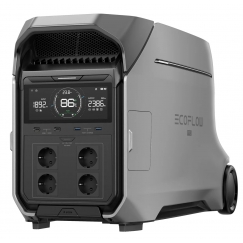
31493153 138,99 € 140,00 € 2 998.99 €Monthly payment from 78,12 €MPN: EFDELTAPRO3-EU-CBOXBattery capacity: 4096 WhInput voltage: 200 - 240 VBuilt-in display: YesBattery technology: Lithium Iron Phosphate (LiFePO4) - -2%
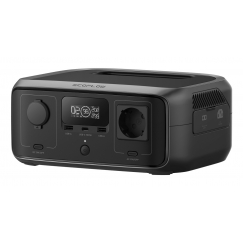
3325142259,00 € 6,06 € 252.94 €Monthly payment from 7,41 €MPN: EFRIVER3-UPS-EU-CBOXBattery capacity: 245 WhInput voltage: 200 - 240 VUSB connector type: USB Type-ABuilt-in display: Yes 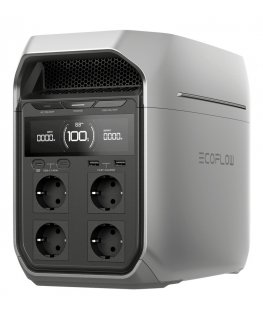
3460479832.35 €Monthly payment from 22,33 €MPN: EFDELTA3P-EUBattery capacity: 1024 WhUSB connector type: USB Type-ABuilt-in display: YesBattery technology: Lithium Iron Phosphate (LiFePO4)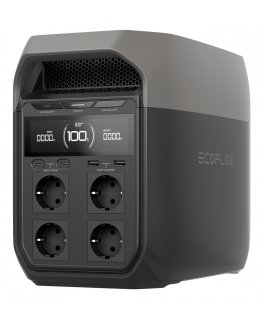
3482280699.00 €Monthly payment from 18,90 €MPN: EFDELTA3-EUBattery capacity: 1024 WhUSB connector type: USB Type-ABuilt-in display: YesBattery technology: Lithium Iron Phosphate (LiFePO4)- -10%

3987632199,00 € 20,00 € 179.00 €Monthly payment from 5,51 €MPN: EF-TRAIL300-NBattery capacity: 288 WhBuilt-in display: YesBattery technology: Lithium Iron Phosphate (LiFePO4)Total output power: 300 W 
3987920159.01 €Monthly payment from 4,99 €MPN: EF-TRAIL200-NBattery capacity: 198 WhUSB connector type: USB Type-ABuilt-in display: YesBattery technology: Lithium Iron Phosphate (LiFePO4)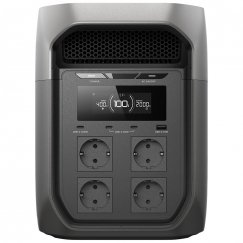
40387831 339.00 €Monthly payment from 35,38 €MPN: EFD3M-G-EU-CBOXBattery capacity: 2048 WhInput voltage: 220 - 240 VUSB connector type: USB Type-ABuilt-in display: Yes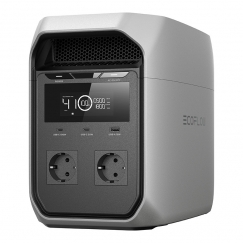
4217002583.09 €Monthly payment from 15,91 €MPN: EFDELTA3C-EUCBox-LThe portable power station has a capacity of 1024 Wh and a continuous power output of 1800 W. It charges quickly using various methods and withstands varying environmental conditio...