


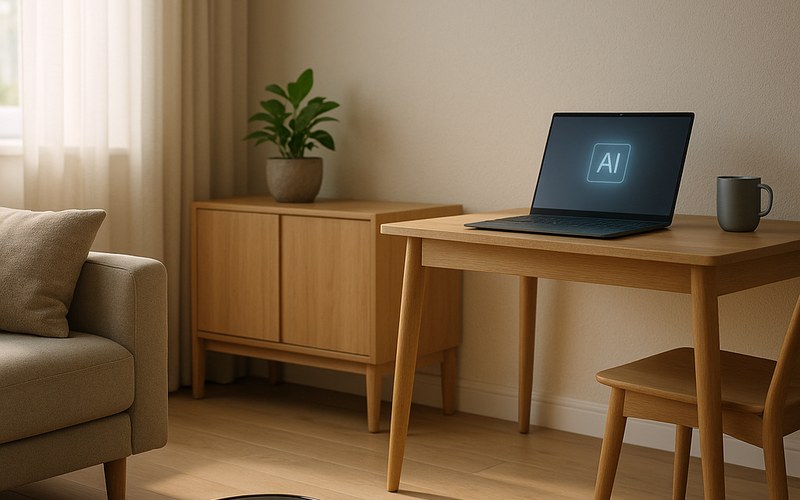
In early July 2026, the UN presented the first report of the Independent International Scientific Panel on Artificial Intelligence - 40 scientists from different countries assessed where the technology is heading and what risks it carries. Secretary-General Antonio Guterres called on governments not to delay the development of international rules for AI. The same month, major labs released new foundation models, so the topic is at its peak of attention right now.
Some argue about regulating GPT-level neural networks, while AI has long been living in far more down-to-earth things - in devices you can buy right now. Not as an abstract "chatbot", but as a working feature inside a device: robot vacuum navigation, local data processing on a laptop, object recognition in a security camera. Let's break down exactly where AI is already built into the products sitting in your home or office.
In short
- In 2026, AI is primarily a built-in device feature, not a standalone product.
- Roborock robot vacuums use AI for navigation and obstacle recognition - from basic level (Q10 PF, €192.74) to advanced mapping (Q8 Max, €249.46).
- AI PCs like the Lenovo ThinkPad X1 2-in-1 Copilot+ (€3289.82) handle part of AI tasks locally on the NPU, without going to the cloud.
- AI security cameras like the Dahua WizSense SD6CE445GB-HNR (€3571.27) recognize objects and events in frame instead of just recording video.
Robot vacuums: AI instead of "bumped into it and turned the other way"
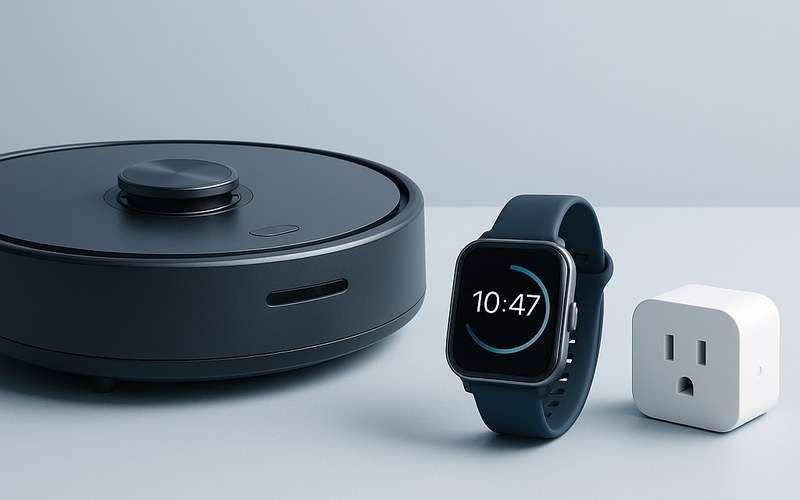
Older robot vacuums navigated by trial and error: hit an obstacle, turned around, tried again. AI navigation works differently - the device builds a map of the room and recognizes objects in its path instead of only reacting to a collision.
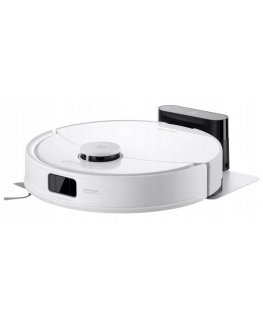
Roborock Q10 PF Robot Vacuum Cleaner (€192.74) is an entry-level model in the lineup with AI navigation: the vacuum recognizes obstacles and plans a cleaning route around furniture and small objects on the floor.
A step up is the Roborock Q8 Max White (€249.46): on top of obstacle recognition, it adds more advanced AI mapping of the room, meaning the vacuum remembers your apartment's layout more precisely and navigates complex rooms with lots of furniture more confidently.
The €57 difference between the two models is essentially the difference between "the vacuum avoids what's right in front of it" and "the vacuum already knows the apartment layout in advance".
AI PC: when AI computes on your desk, not in the cloud
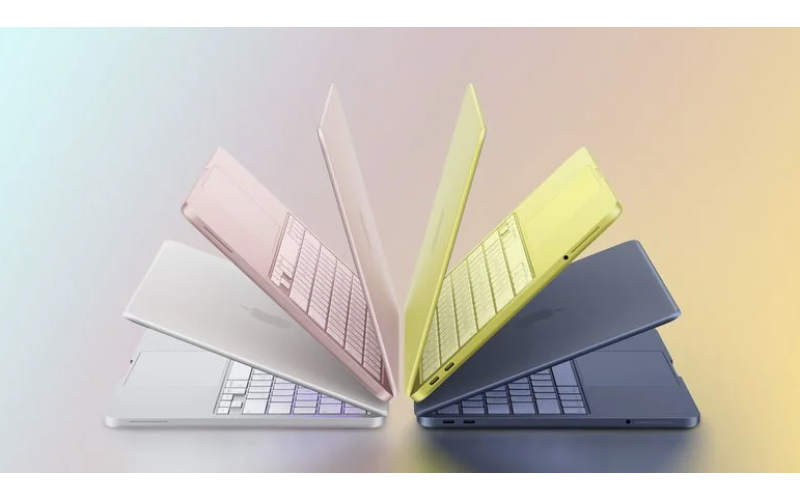
The Lenovo ThinkPad X1 2-in-1 Gen 10 Aura Edition Copilot+ PC (€3289.82) belongs to a new class of devices - a step forward compared to a regular laptop where the chatbot only lives in the browser. It has an NPU - a dedicated chip for AI computation, Copilot is built in at the system level, and part of the AI tasks can run locally, without sending data to the cloud.
For an everyday user this means two things: faster response where you don't need to wait for a server reply, and part of the data processing stays on the device instead of flying off to a third-party server with every request.
Smart security: a camera that understands what it sees
The Dahua Technology WizSense SD6CE445GB-HNR (€3571.27) is a dome IP camera for indoor and outdoor use with 2560 x 1440 pixel resolution. What sets it apart from a regular security camera is AI detection: the camera recognizes objects and events in frame instead of just recording a video stream you'd later have to scan through manually to find the right moment.
FAQ: AI in home appliances
How is AI navigation in a robot vacuum different from regular navigation?
A regular vacuum reacts to hitting an obstacle after the fact. AI navigation recognizes objects and builds a map of the room in advance, so the cleaning route ends up more precise with fewer bumps into furniture.
What is an NPU in a laptop and why does it matter?
An NPU is a dedicated chip built for AI computation. It lets part of the AI tasks run locally on the device instead of through the cloud, as in the Lenovo ThinkPad X1 2-in-1 Copilot+ PC.
Why do you need AI detection in a security camera if you can just record video?
AI detection recognizes objects and events in frame, saving time - you don't need to manually scroll through hours of footage to find the moment you need.
Is it worth paying more for a model with more advanced AI if the base one is already "AI-powered"?
It depends on your needs. For a small apartment, basic obstacle recognition (like the Roborock Q10 PF) is usually enough. For a home with a complex layout and a lot of furniture, advanced mapping (like the Roborock Q8 Max) reduces getting stuck and repeated passes.
Bottom line
While the UN and labs argue over rules for large models, AI in home appliances is already solving concrete problems. A robot vacuum cleans by a built map instead of by guesswork. A laptop with an NPU computes part of its requests right on the device. A camera recognizes events in frame on its own instead of just recording a stream. The difference between "AI-powered" and "not" in 2026 is increasingly measured not by hype, but by a concrete feature - and that's what's worth looking at when choosing a device.
Related products
3811873