



Toote toon ja tegelik värvus võivad erineda pildil kujutatust, kuna pildid on illustratiivse iseloomuga. Samuti on toote kirjeldus üldine ega pruugi sisaldada kõiki toote omadusi.
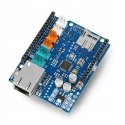
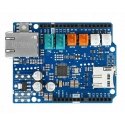
Arduino Ethernet Shield 2 with Micro SD reader
3602055 AN-03926
7630049200364
Tarneaeg 11-18 t.p.
Kõik toote kohta
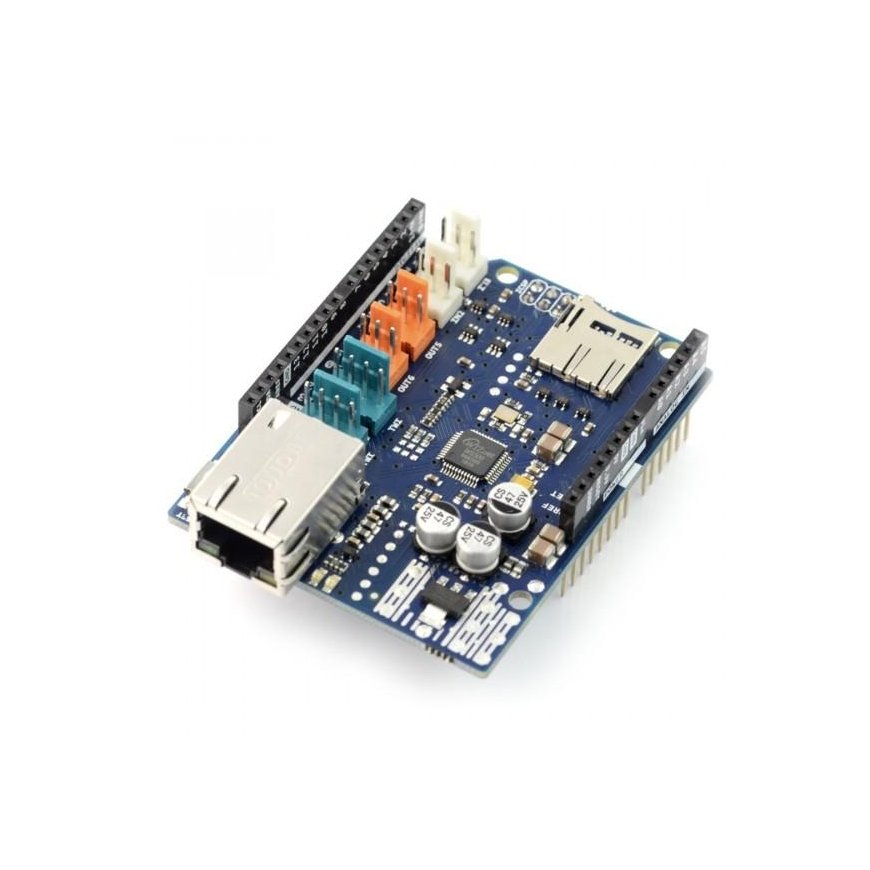
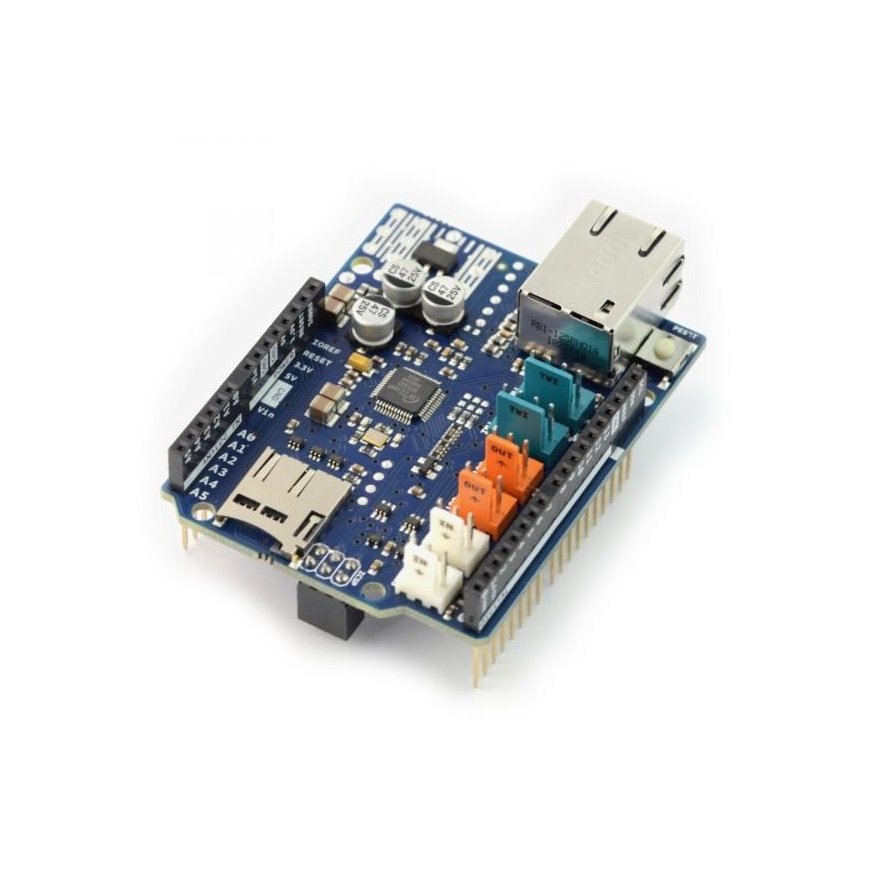
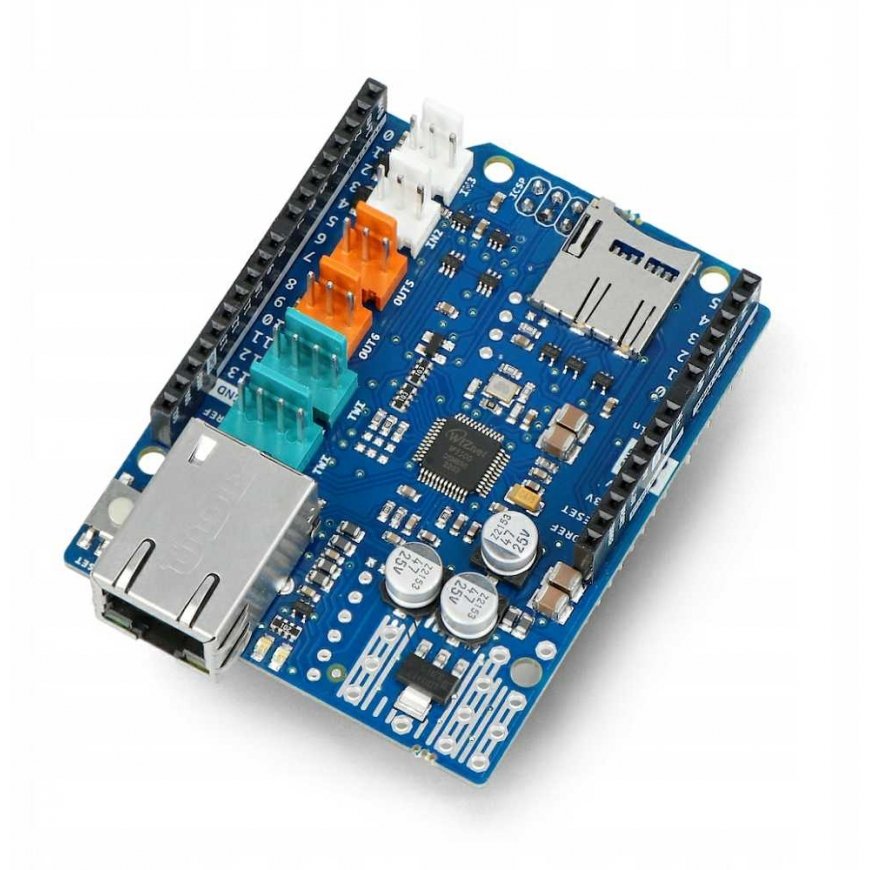
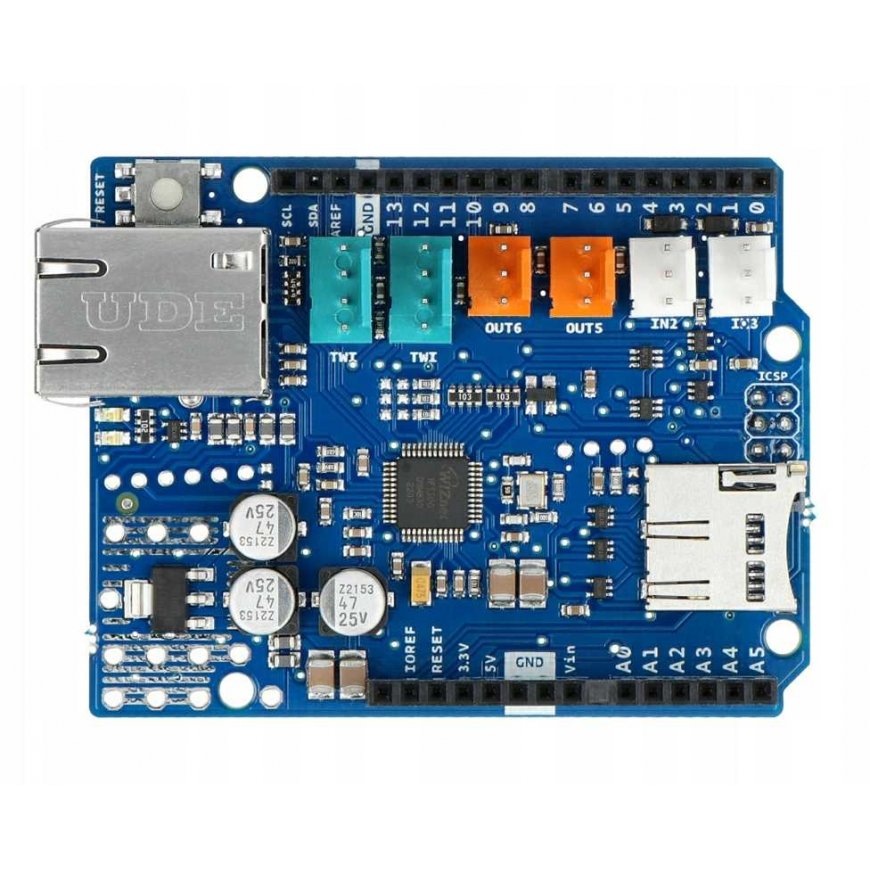
The Arduino Ethernet Shield 2 connects your Arduino to the Internet in just minutes. Simply insert this module into your Arduino board, then connect it to your network with an RJ45 cable (not included), and follow a few simple steps to start controlling your world over the Internet. As always with Arduino, every element of the platform – hardware, software, and documentation – is freely available and open source. This means you can learn exactly how it’s made and use its design as a starting point for your own circuits.
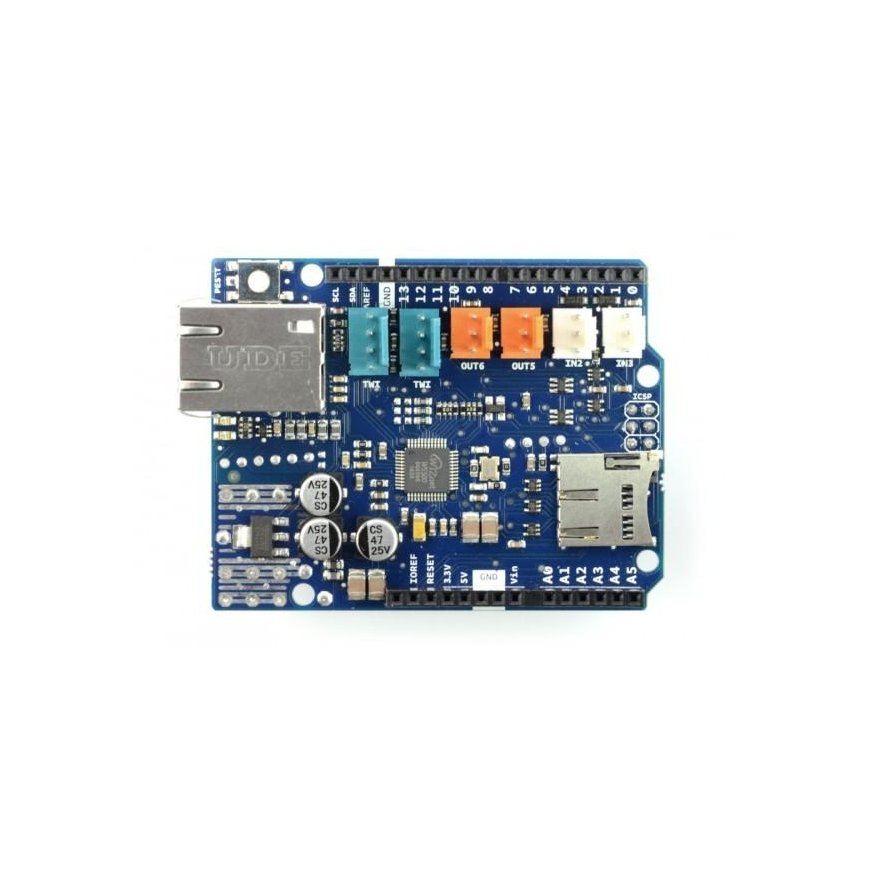
The Arduino Ethernet Shield 2 allows you to connect your Arduino board to the Internet. It is based on the Wiznet W5500 Ethernet chip. The Wiznet W5500 provides a network (IP) stack that can support both TCP and UDP. Wiznet supports up to eight simultaneous socket connections. Use the Ethernet library to create sketches that connect to the Internet using a dongle. The Arduino Ethernet Shield 2 dongle connects to the Arduino board using long wire-wrapped headers that pass through the dongle. This does not change the pin layout and allows you to stack another dongle on top of it.
The Ethernet Shield 2 has a standard RJ-45 connection, with an integrated line transformer and Power over Ethernet enabled.
The add-on has a built-in micro-SD card slot that can be used to store files for network service. It is compatible with Arduino Uno and Mega (using the Ethernet library). The built-in microSD card reader is accessible via the SD library. When working with this library, SS is on pin 4.
This set-top box also includes a reset controller to ensure that the W5500 Ethernet module is properly reset when power is applied. Previous versions of the set-top box were not compatible with the Mega and had to be reset manually after power is applied. The current set-top box supports a Power over Ethernet (PoE) module for powering over a standard Category 5 Ethernet cable.
The PoE module is not built into the board, it is a separate component that needs to be added. The Arduino communicates with the W5500 and the SD card using the SPI bus (via the ICSP header). This is on digital pins: 10, 11, 12 and 13 on the Uno and pins 50, 51, 52 on the Mega. On both boards, pin 10 is used to select the W5500, and pin 4 is used to select the SD card. The aforementioned pins cannot be used for general input/output. On the Mega SS hardware, pin 53 is not used to select either the W5500 or the SD card, but must be considered as an output, otherwise the SPI interface will not work.
Note that the W5500 and the SD card share the SPI bus, so only one of them can be active at a time. If you use both peripherals in your program, then the appropriate libraries should take care of this. However, if you are not using either peripheral, you will need to deselect it. To do this with the SD card, set pin 4 as an output. To do this with the W5500, set pin 10 as a high output.
The set-top box has a standard RJ45 Ethernet jack.
The Reset button on the console resets the W5500 and the Arduino board.
There are several information diodes (LEDs) on the board: ON: indicates that the board and the set-top box are on, 13 is the standard built-in light-emitting diode (LED) of the Arduino, ACT: flashes when RX or TX is active, LINK: indicates the presence of a network connection and flashes when the set-top box is transmitting or receiving data
This add-on also includes Tinkerkit compatible connectors:
- 2 TinkerKit connectors for two analog inputs (white), connected to A2 and A3.
- 2 TinkerKit connectors for the two Aanlog outputs (orange in the middle) are connected to the PWM outputs on pins D5 and D6.
- 2 TinkerKit connectors for TWI interface (white with 4 pins), one for input, the other for output.
Technical data:
- Operating voltage: 5V
- Ethernet controller: W5500 with internal 32K buffer
- Connection speed: 10/100Mb
- Connection/communication with Arduino on SPI port
- PoE module features:
- Complies with IEEE802.3af requirements
- Input voltage: 36-57V
- Overload and short circuit protection
- 12V output
- High efficiency DC/DC converter: typical 85% @ 80% load
- 1500V isolation (input to output)
Links: